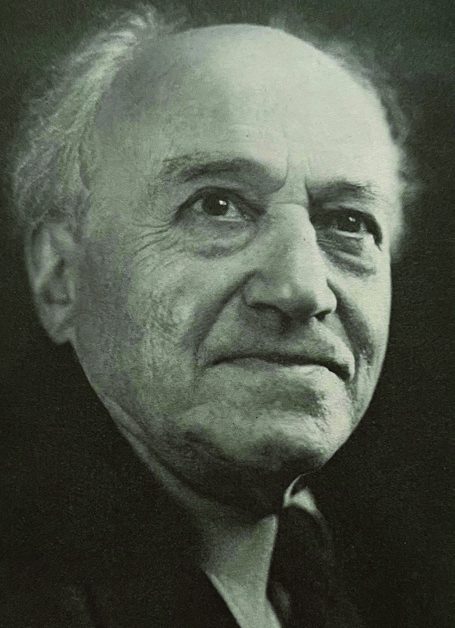
One of the great musical works of the 20th century, based on the text of the Union Prayer Book, was Ernest Bloch’s (1880-1959) “Sacred Service.” It is the first large-scale orchestral and choral work ever composed for the synagogue by a major Jewish artist. Many musicologists regard it as the greatest Jewish musical composition of the 20th century. Peggy Barber and I both agreed that this was a major undertaking and would require an enormous commitment of time, energy and resources.
Ms. Barber was familiar with the service and mentioned that her group performed a limited amount of Jewish music and would certainly be interested in doing more. She listened intently to my invitation and examined the musical service that I brought her. She put the copy down and in a commanding voice, she said, “I would love to do it! Of course, I’ll need your help with the Hebrew. Would you be able to come to several of my rehearsals and help out with the Hebrew pronunciation?”
“It’ll be my pleasure,” I answered. “I’ll supply you with all the choral books you’ll need. I’m also sure I’ll have to double our weekly choir rehearsals at Temple Sinai, so that the choir can master this difficult work and prepare for this service.” I asked Bob Sugarman to serve as chairman of the Ernest Bloch Music Festival. Bob is very knowledgeable and a pleasure to work with. I asked him to serve as chairman of the following year’s music festival as well. In the years that followed, he became a highly skilled and exceptional Torah study instructor.
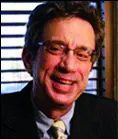
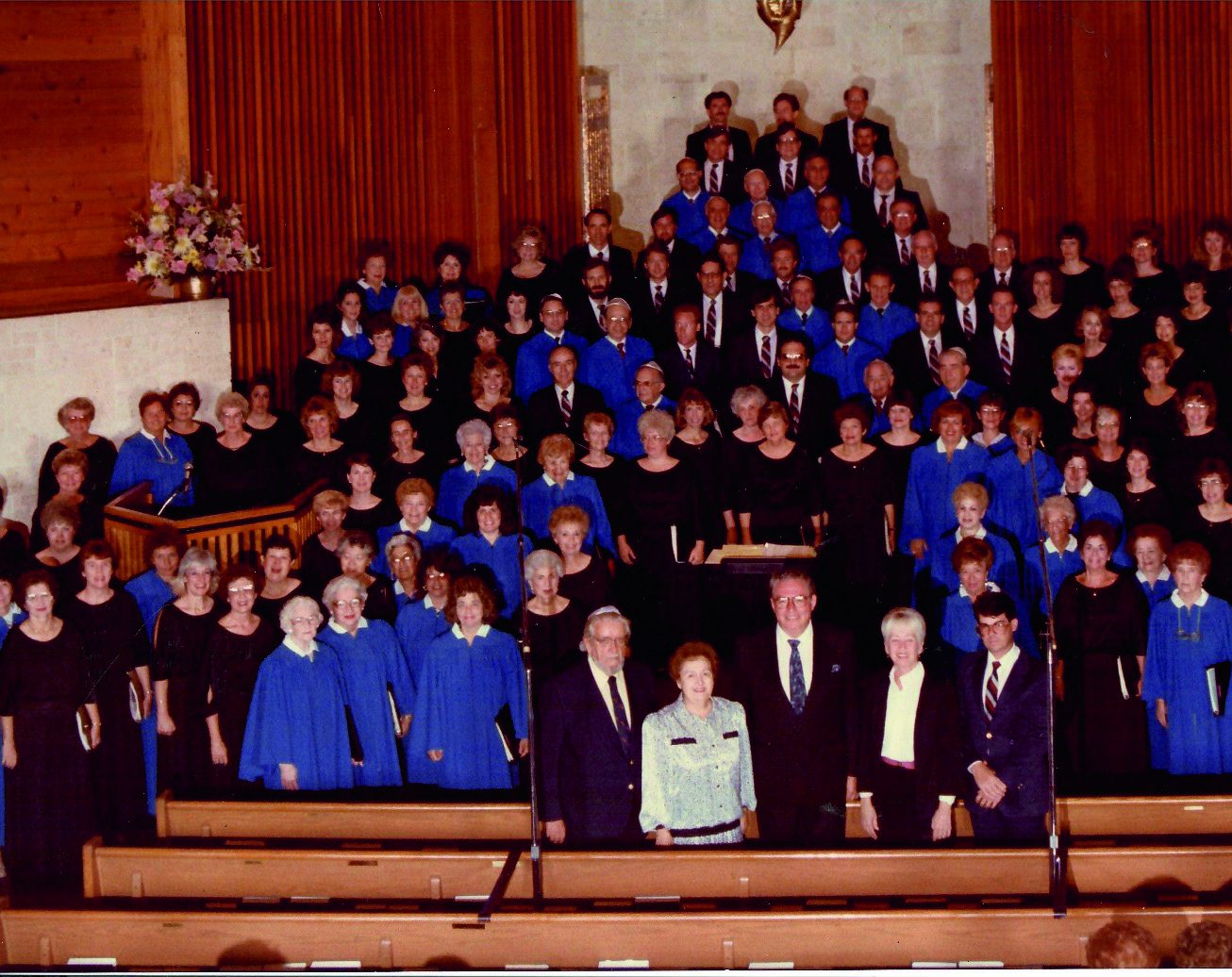
The service was presented in 1986. A special sixteen-page program was printed, which included the service and program notes. The musical service was truly an inspiration to our congregation and the many visitors who were there that Sabbath evening. Our temple was privileged once again to have the Nova Singers a few years later, but that’s another great story.
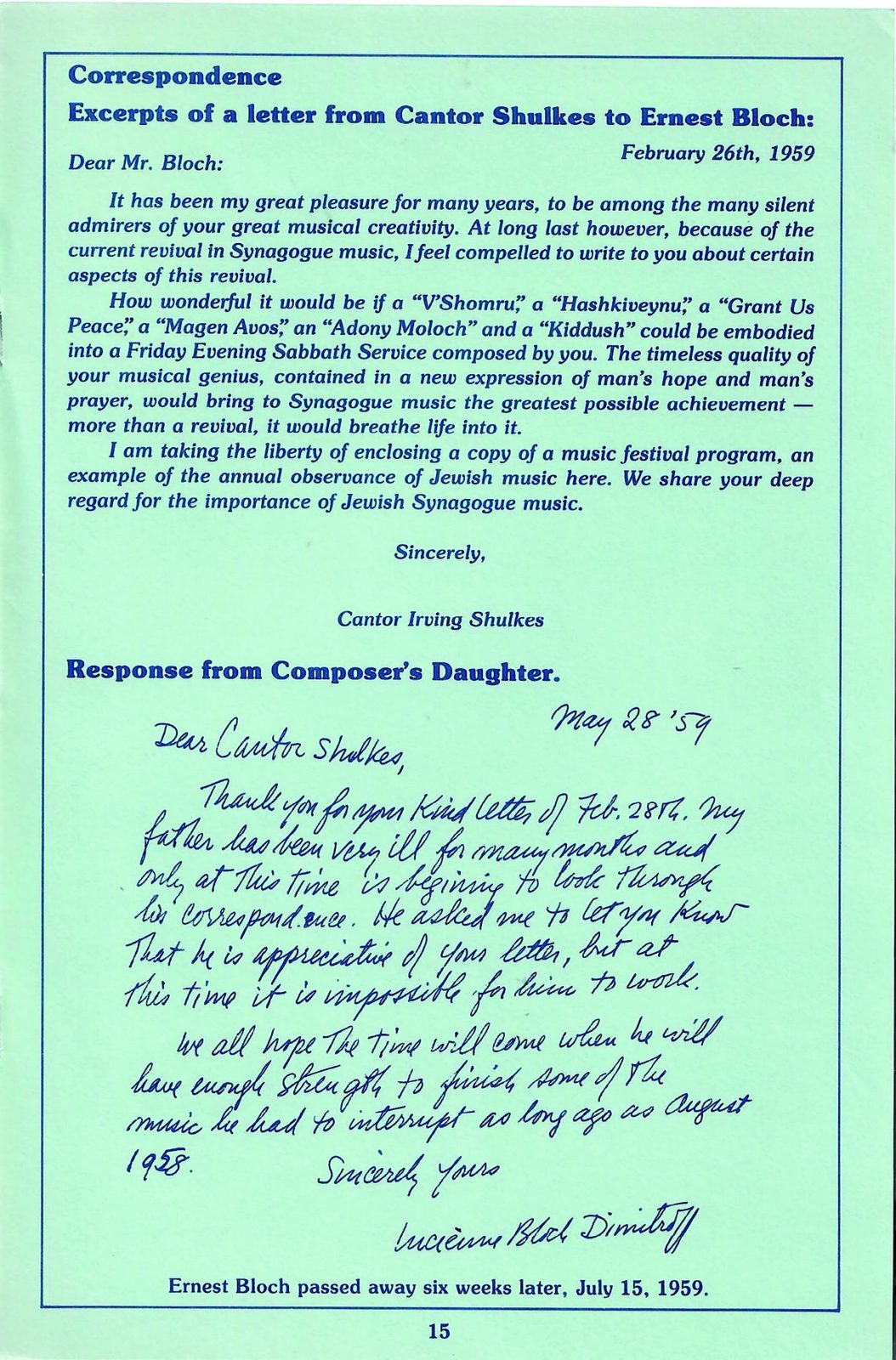
I was so impressed with the Ernest Bloch Sacred Service that I wrote the composer a letter, years earlier, praising his work. Excerpts of the letter and his daughter’s response appear below.
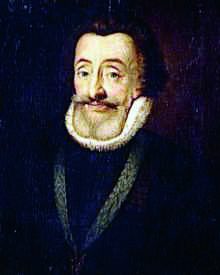
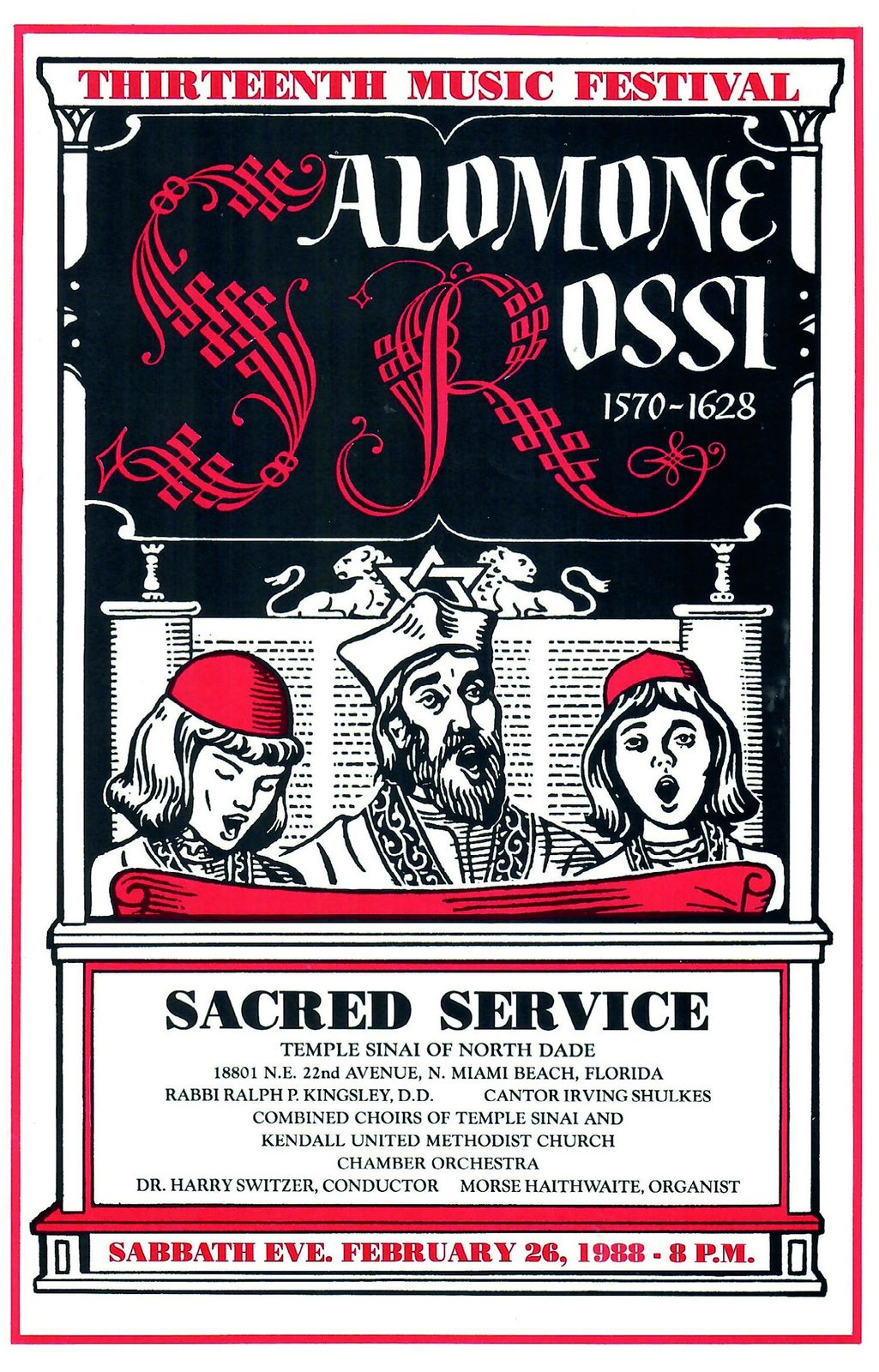
In an era of exuberant creativity in the arts, literature and sciences, the name of Salomone Rossi (1570-1628) stands out as a towering figure of the Italian Renaissance. He played the violin, sang and composed music at the court of Mantua for about 40 years. As my professor, Isadore Freed, cogently observed, “It is remarkable that in the bigoted atmosphere of the 16th century, a composer who always signed himself Salomone Rossi, Ebreo (The Hebrew), could have risen to his important place while remaining faithful to the religious beliefs of his forefathers.”
Rossi’s synagogue music, written in the Italian Renaissance style with his extensive knowledge of Hebrew and musical composition, represents the earliest attempt to harmonize Jewish music. His Jewish and secular music bear a strong resemblance to each other. It was in 1954 that the distinguished Isadore Freed, my professor at the School of Sacred Music, Hebrew Union College, adapted Rossi’s music to the Sabbath service text of the Union Prayer Book.
Morse Haithwaite, our gifted organist at Temple Sinai, was also the organist at Kendall United Methodist Church. He helped me get in touch with Dr. Harry Switzer, the musical conductor of the church choir and its chamber orchestra. I asked Dr. Switzer if he and his 48-voice choir would join our 45-voice choir in a presentation of the Rossi service at my temple. He was familiar with Rossi’s music and the Italian Renaissance period and quite interested in my invitation. After meeting with Dr. Switzer and fully discussing the presentation, he was most receptive, and I would say, delighted, to join us. In addition, I was hoping that our temple could commission him, with his vast experience, to score the Rossi service for chamber orchestra. This opportunity excited him, and he readily agreed.
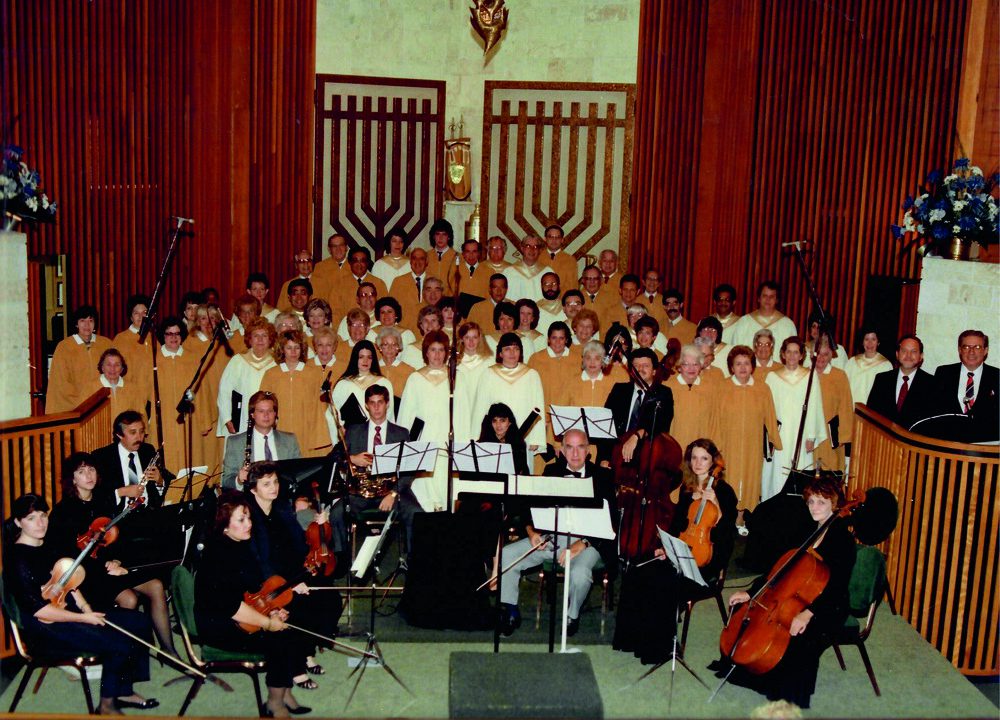
We had one rehearsal together at the temple. This joint venture proved to be a great milestone in the musical life of the temple, church and the general community. For the service, I was able to create cantorial solos in Salomone Rossi’s Renaissance style: a “Kiddush,” a candle blessing and the prayer, “V’neemar,” from Rossi’s actual music which was available in the Sacred Music Press. The presentation of the Rossi service was a Sabbath evening I will always treasure.
Throughout the years, the Spring Music Festival concerts were constantly on my mind. I tried to include the children’s choir, our rabbis, administrator, and gifted cantors in the South Florida area as much as possible in our programming. Add to that the adult volunteers of our temple choir, and you already have an impressive sound. These were always the thoughts that ruminated in my mind as I planned each and every music festival.