Age Ten to Fourteen
At my desk is a picture with some of the animals from Noah’s ark. Written below the picture are the words, “All God’s critters got a place in the choir.” To me, there is an inherent beauty, feeling and truth to that saying. Some of my earliest memories go back to the time when I sang as a boy alto in a professional male synagogue choir in New York City.
Max Nadler, the conductor, worked very hard to teach the boy altos and sopranos their vocal parts and harmony for the religious services. Most of the boys who sang in the choir came from Jewish day schools. They had strong Hebrew backgrounds and were easily able to learn the musical parts. I was part of that choir from the age of ten until my voice began to change four years later. We sang for the High Holy Days, for special Sabbaths and for weddings.
One of the cantors we sang with was Cantor Kapov-Kagan in Brooklyn and another was the famous Cantor Moishe Oysher, a movie actor who made very successful Yiddish films during the 1930s. He was featured with our choir at a special United Jewish Appeal fundraising concert in Manhattan in 1942 during the Second World War.
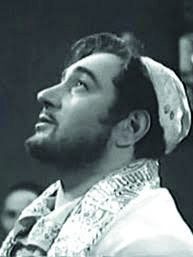
We sang frequently at wedding services in New York City. I only wish I could remember the names of the many different cantors with whom we sang. You could hear a pin drop when they chanted the poignant chants of our heritage with an impressive choir standing next to them. The opening musical selection for the wedding service was often Louis Lewandowski’s stirring “Ma Tovu” (How goodly are thy tents), sung by the cantor and full male choir as the cantor walked down the aisle. A short time later, as the boy alto, I would walk down the aisle singing “I Love You Truly,” followed by the traditional Hebrew chant, “Vimaley” (May the desires of our hearts be fulfilled for good. Amen). In terms of present-day usage, I am sorry to say, “I Love You Truly” has gone the way of the “Lost Chord.” Without a doubt, however, the threeand four-part choral music that we sang, with its traditional harmonies, cast a spell over me which carried well into my adult life.
Elementary School
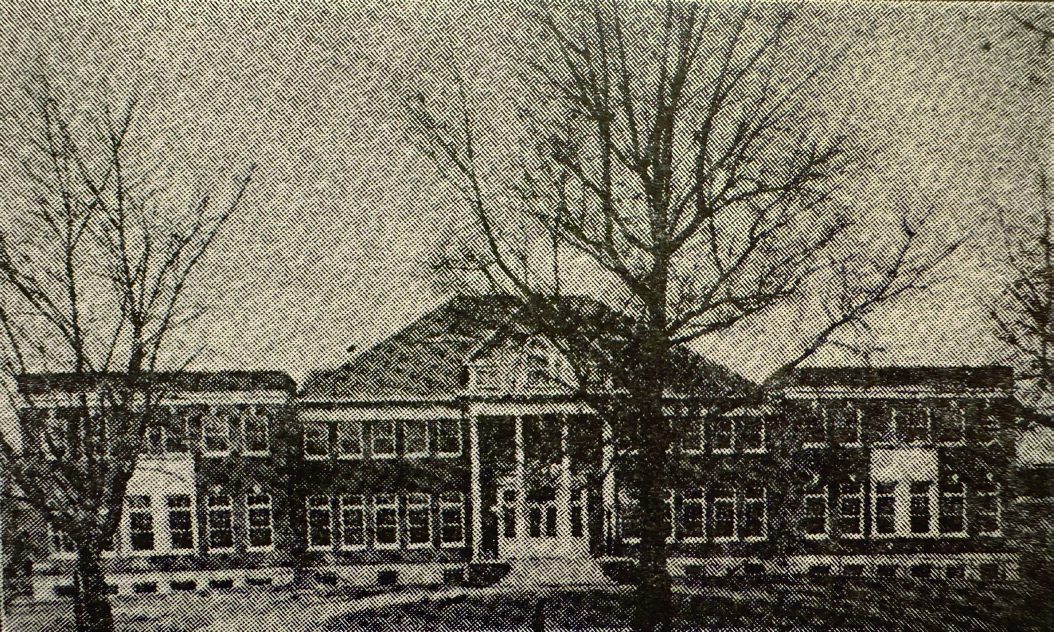
During this time, I was attending the all-boys Yeshiva Etz Chaim elementary school in Borough Park, Brooklyn. My parents were practicing orthodox Jews who felt strongly about the religious education of their children. At an early age I was enrolled in the yeshiva. The tuition at the school was expensive and clearly out of reach for our family during this difficult time, the economic depression of the 1930s in our country.
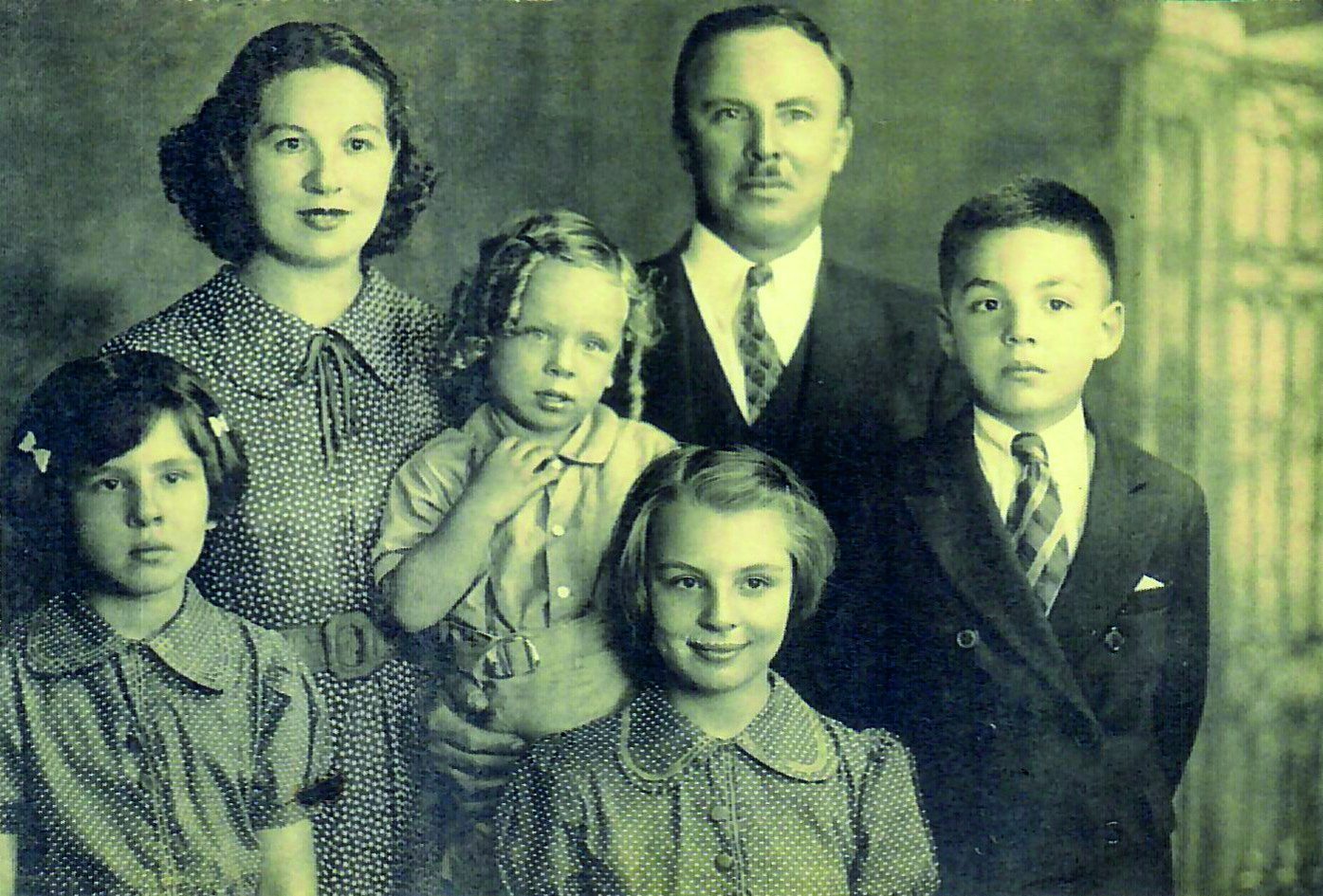
“What do you do for a living?” the yeshiva administrator asked my father. “I’m a house painter trying to make a living for my wife and three children, and a religious education is a must for our son, Yitzchok (Irving),” my dad answered.
“What an unexpected surprise this meeting is – it must be providential! I was just telling our board of trustees the other day that our building is seriously in need of a painting. Surely, you must have been sent to us to fill this dire need,” the administrator said.
The negotiation ended abruptly and my father was resigned to it as he accepted the financial terms. The school stretched one full block from 50th to 51st Street and my father could be seen regularly painting the school for the next few weeks. My younger brother Tzvi (Howie) was enrolled at the Yeshiva five years later.
The Depression - Difficult Times for the Family
At this time, our family was feeling the financial effects of the depression. My mother found employment as a seamstress a few blocks away from our home.
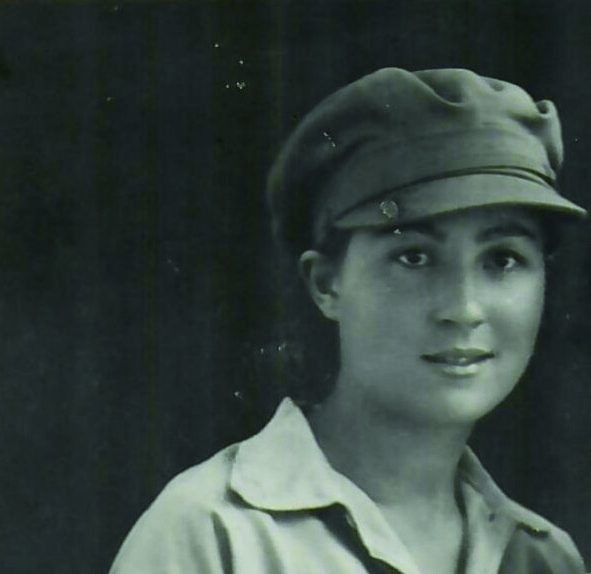
She worked about a month in the factory when she caught the attention of the manager. He was hoping they could get together. She was not pleased when he suggested that they go out for a drink after work. He persisted and would not take “no” for an answer. My mother said, “I have a husband and three children at home. I didn’t sign up for this. I don’t like what you’re doing.” The situation got worse. My mother went to see her sister Aliza to tell her what happened. Aliza told her, “Rivka (Rebecca), run for your life.” My mother quit the next day.
My father reassured her, “It’s okay, my sweet one. Just take care of the children. That is far more important.”
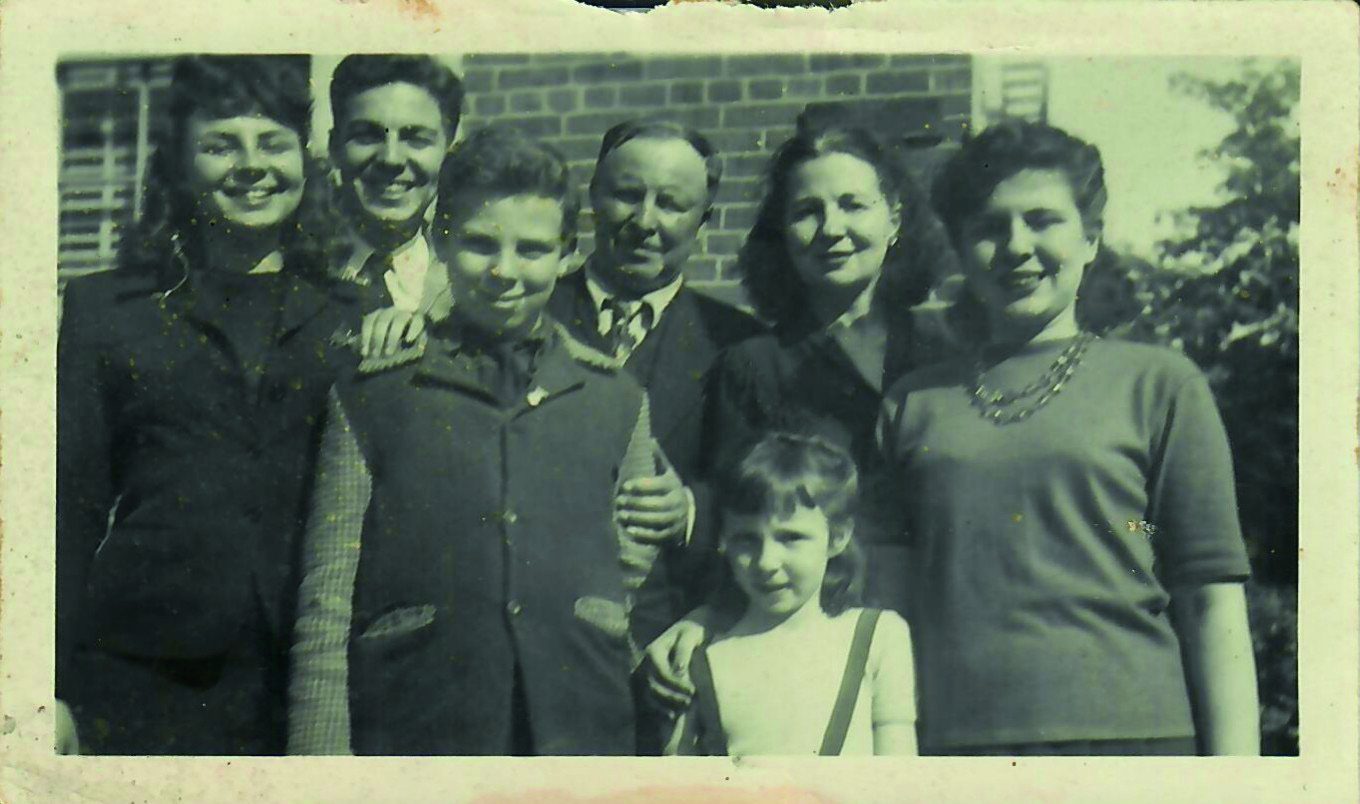
My two older sisters, Pauline and Doris, were enrolled at afternoon Talmud Torah schools and eventually Hebrew high schools. And my sister, Judy, born later in 1940 (while I was at Yeshiva Etz Chaim), would be attending Beth Jacob School for Girls, an ultra-orthodox academy where she would be reading the Torah in Hebrew and translating it into Yiddish - not easy by any standard.
Yeshiva School Days
My school day at the yeshiva consisted of three hours of Hebrew studies in the morning and three hours of secular study in the afternoon. Lunch was served in between. I was a fairly good student but also one that required occasional discipline in the Hebrew school where the teachers were very strict. Two of them, as I recall, were not only strict but somewhat intimidating and harsh. Over a period of two years, I was slapped once in the face by each of them. Was I out of line? I don’t remember.
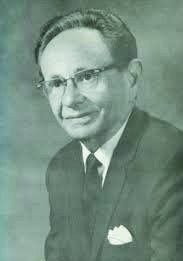
A few years before, in 1939, he completed his collection of 223 Hebrew songs in Manginoth Shireynu, a book of religious and secular songs for the Jewish year. He taught music twice weekly to several classes. I learned a great deal from him. He was patient, personable, and full of energy in his storytelling and introduction of new songs. The Hebrew lyrics to the song “Hava Nagila” were attributed to him. Cantor Nathanson served as cantor for the Society for the Advancement of Judaism for 46 years. He was clearly a cantor and teacher who influenced many lives, including mine.
The High School Years
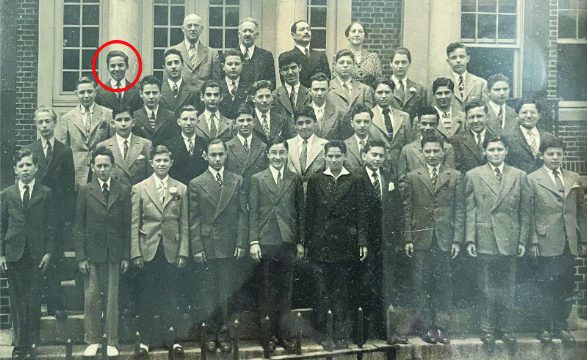
My parents strongly valued a Jewish education and, as their eldest son, wanted me to continue my yeshiva studies at the high school level. In the summer of 1943, following my graduation from elementary school, my father engaged a teacher of Talmud. A little knowledge of the Talmud was a prerequisite for attending Yeshiva University High School or as it was called, Talmudical Academy, in Washington Heights, Manhattan. I studied with Mr. Levy several times a week. I learned a few pages from a section of the Talmud called “Bava Metzia” which was in Aramaic, a language close to Hebrew. Two other students from my yeshiva were also admitted to Talmudical Academy high school.
Our yeshiva elementary school was highly regarded in the Jewish community and, as it turned out, no incoming test was even necessary for admission to the high school. Talmudical Academy or Yeshiva University High School for boys was a school noted for its very high religious and academic standards. Above all, it was a friendly and welcoming school, and I was glad to be accepted as a student.
It was quite the commute from my home in Borough Park to the school. I had to leave at 7:30 a.m. to take a bus to the subway and a train to Washington Heights followed by a short walk to the school. Sometimes, I skipped the bus and walked to the train station. It took me an hour and a half to get there. The ride was a long one and, occasionally, I would buy the liberal newspaper “PM” to read. I enjoyed the column “My Day” by Eleanor Roosevelt and, as a teenager, was horrified to read about the Nazi atrocities in Europe during the years of 1943-1945.
The school days in Washington Heights were Sunday through Thursday, and the hours were from 9 a.m. to 5:20 p.m. with a break for lunch. For me, it was a drastic change to attend school all day on Sunday and have a free day on Friday, a special day because of the coming of Shabbat. Half the school day was spent on Talmud, Bible, customs, rituals, Hebrew grammar and history. The other half of the day was spent on standard secular subjects. The Hebrew instructors were scholarly, knew their material and the general atmosphere was conducive to learning.
One of my favorite subjects was Talmud and the challenge was to make it interesting and relevant to everyday life. I remember very clearly the Talmud lesson with Dr. Samuel Saar, my teacher in 1945. “The holiday of our freedom, Passover, our emancipation in the Bible, will be here next week,” he said. “There are two kinds of slavery in the world. One is outside of us, very oppressive and cruel, which seeks to take away our liberty and silence us. We have to fight that! And the other is the slavery to our own emotions which can control us and sometimes lead us to negative and unhealthy actions. It is this inner slavery which we have to channelize but in a very positive way.” I have never forgotten that lesson and probably never will.
In my afternoon English studies, I was a fairly good student. One day in my English class, I was reading the book Michael Strogoff by Jules Verne that I brought to class. It was an adventurous spy story in 19th century Russia full of intrigue and suspense. My teacher was annoyed when he saw me reading the book during his teaching session and sent me to the dean. The dean asked me why I was sent to him, and I told him what I did. He was impressed with the author, Jules Verne, and asked me for details about the book. After a few minutes, the dean sent me back to class. That was the only discipline problem I ever had at the school.
The school environment was very friendly and wholesome and to me, very enjoyable. I started out daily at 7:30 a.m. and arrived home at about 7 p.m. After dinner, however, I was often tired, and sometimes neglected my homework. On Friday, my day off, I was eager to make a little money and got a delivery job working for a kosher meat market a few blocks from my home. The store provided me with a good bicycle to make my rounds.
When I was 15 years old, an incident took place outside my school that has been difficult to erase from my memory. I left high school in Washington Heights at 5:20 p.m. wearing a yarmulke on my way to the subway. After a few blocks, when I was almost halfway there, two guys were following me. One called out to the other, “Let’s get that kike!” That was the first time I ever heard the word “kike.” I instinctively felt that it was a hostile term, but I wasn’t about to interpret it further. I knew I had to make a run for it or I would be toast. I ran as fast as I could the remaining blocks to the subway station. They were right behind me.
When I got to the train station, I didn’t pay the nickel required for the train trip. I saw the turnstile, grabbed both sides of it with my hands and jumped right over it to the sounds of an incoming train which I quickly boarded. My would-be assailants were unhappily standing at the turnstile while the train took off. Their prey had gotten away. I was so glad when I arrived home that day!
Toward the end of the third year at Yeshiva High School, my friend and classmate, Moshe Stambler, suggested that we transfer to a secular high school in the downtown Manhattan area where we could graduate in three and a half years rather than the customary four. We were only five courses away from graduation. The three-hour daily trip to and from school was also a sizeable problem for me. I checked the details and found it to be true.
We transferred as quickly as we could and soon found ourselves in a totally new and different high school community. We were also a few blocks from our favorite eating place, the Horn and Hardart cafeteria, a fast-food restaurant chain that offered low-cost food through a coin operated automat.
Secular High School
The biggest surprise and somewhat of a shock was seeing boys and girls studying together for the first time in my life. The atmosphere was distinctively different but quite welcoming. At the end of the semester, to my astonishment and my delight, my grades were in the mid and high nineties. I graduated from high school in three and a half years and was proud of it.