You’re in the Army Now
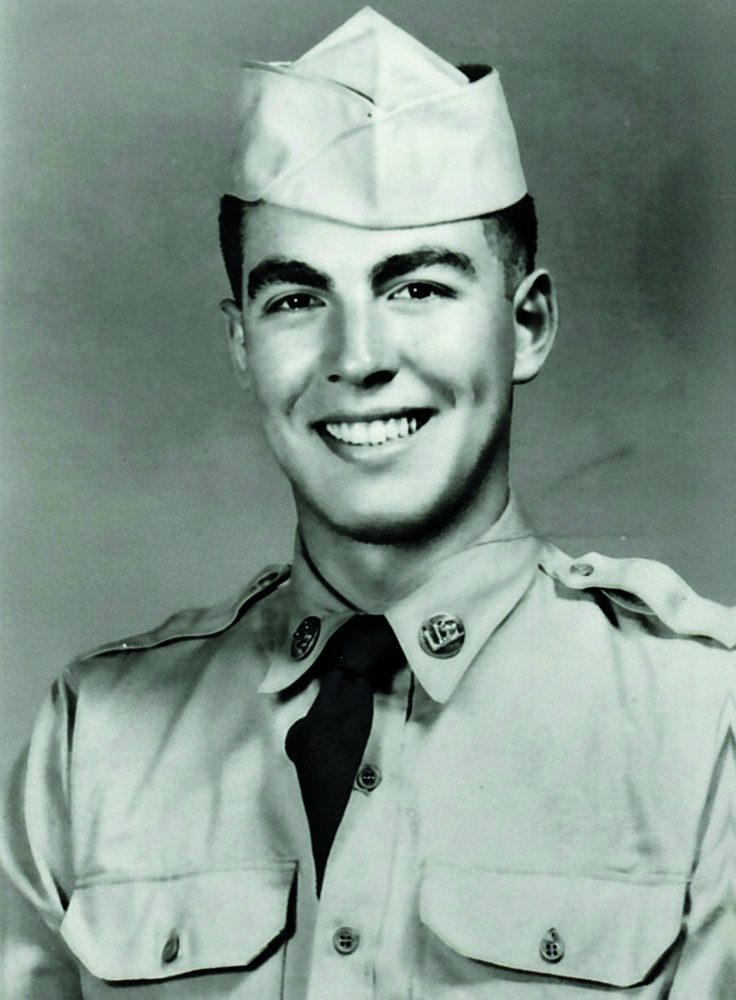
One week later, I was at Camp Kilmer, New Jersey, where I was soon transferred to Fort Knox, Kentucky, for basic training with the Third Armored Division. Life in the army was full of surprises for me from one day to the next. The training was rough, rigorous, and challenging. In December of 1952, I came home on a furlough. I told my parents I’d be going, in all certainty, to Korea. That month was one of the toughest and brutal times for our soldiers who were fighting there, so far away from home. I vividly remember the parting words of my mother when she said, “Don’t forget to write.”
My orders, in fact, were to go to Korea. At literally the last minute, however, because of my expertise in the area of speech, I was sent along with 102 soldiers to Puerto Rico. We were all proficient in English and came from all parts of the country. We had our college degrees and most, like me, were working on their master’s degrees or their doctorates.
We were well-screened for our past teaching experience. Instructional duties included 20-30 hours of instruction and additional time for preparation. Our goal was clear to all of us: to teach survival English to Puerto Rican soldiers at Camp Tortuguero, an army base located approximately 35 miles west of San Juan.
Though I only had three years of high school Spanish under my belt, my Spanish was improving day by day at the camp. I was asked to teach a company of men, a hundred or more being between the ages of 18-20, the basics of English and army commands. After 20-30 minutes of instruction, the company would be divided into groups of 12 to 15 where the instructors would then review the lesson of the day for another thirty minutes.
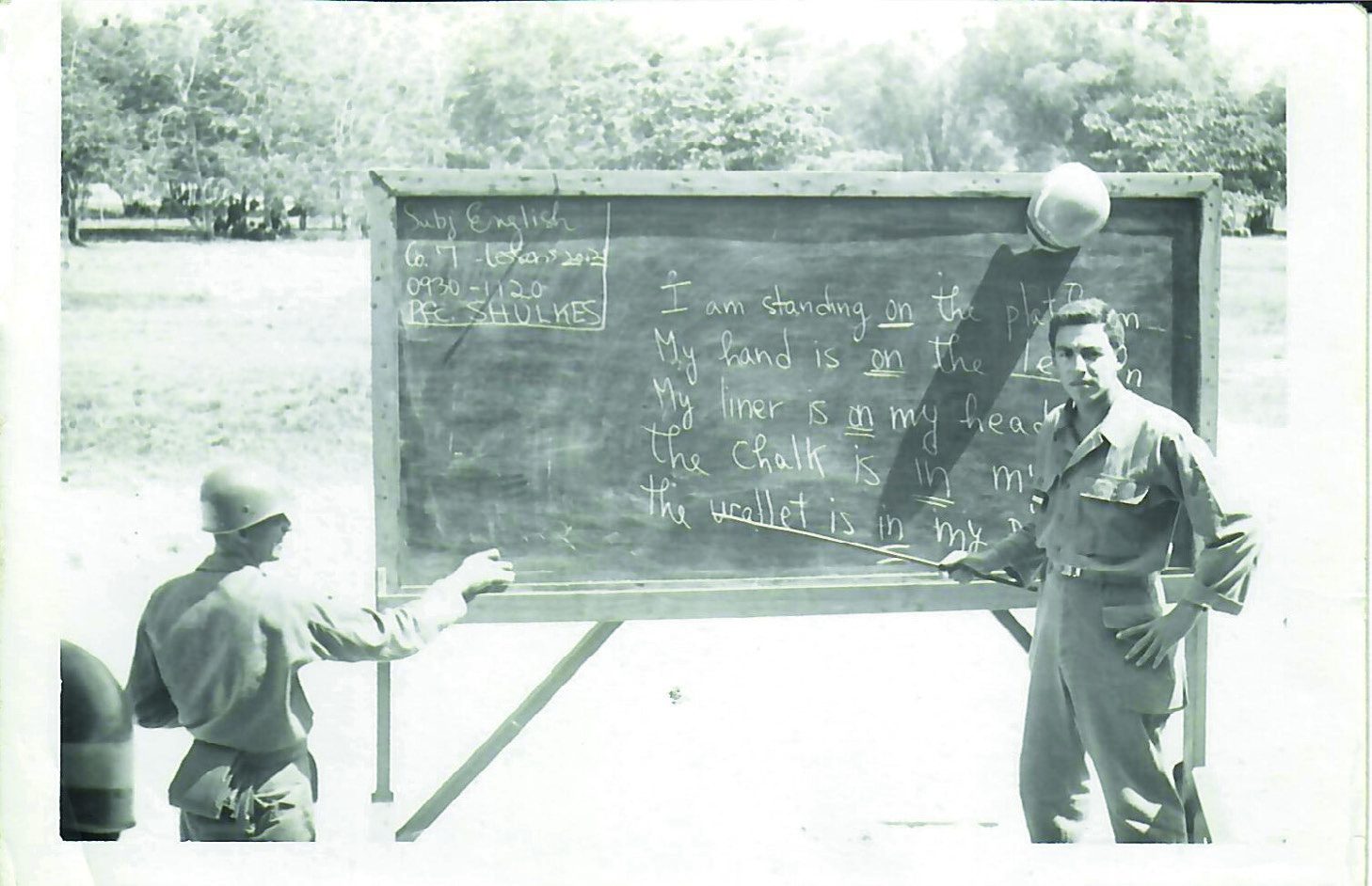
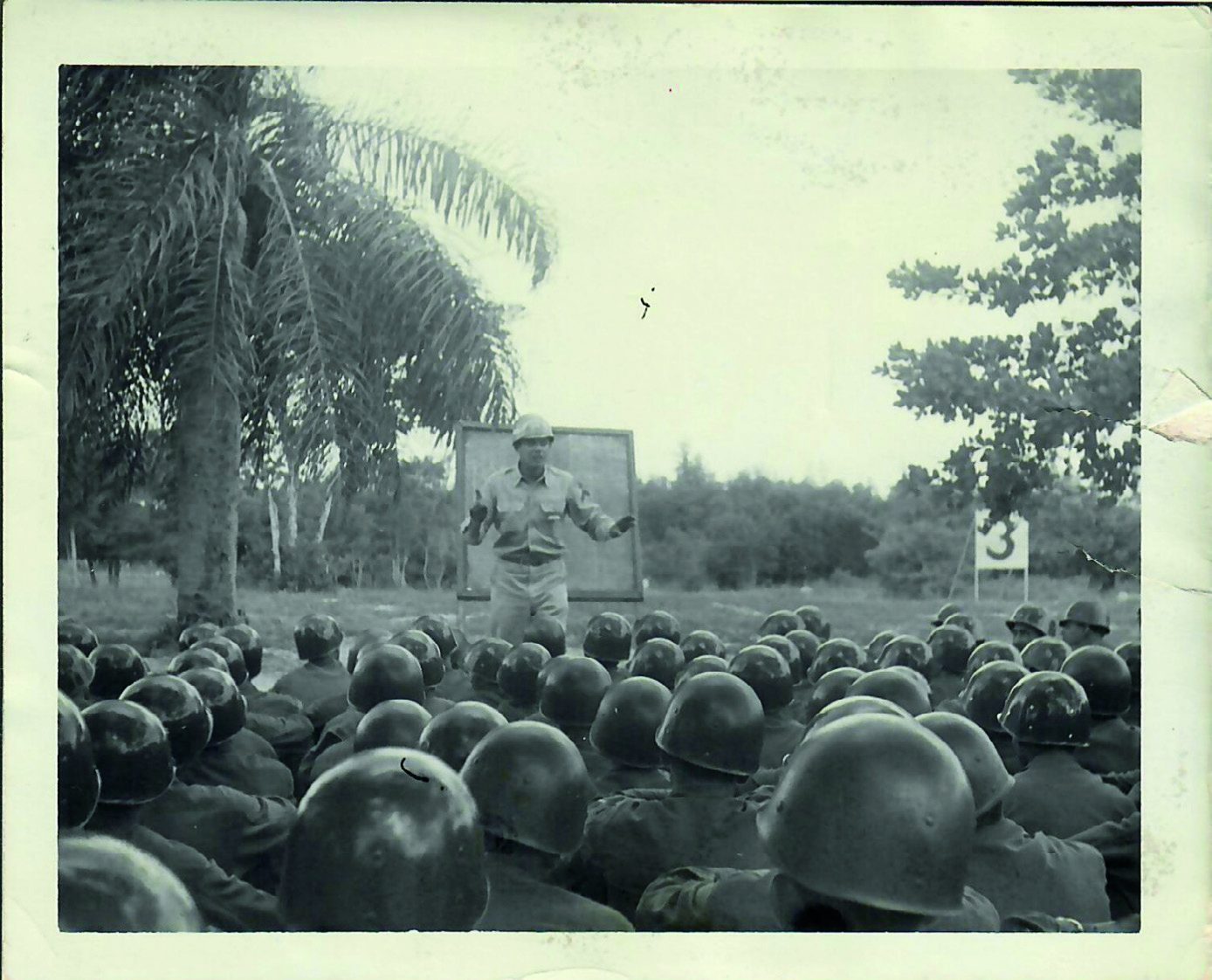
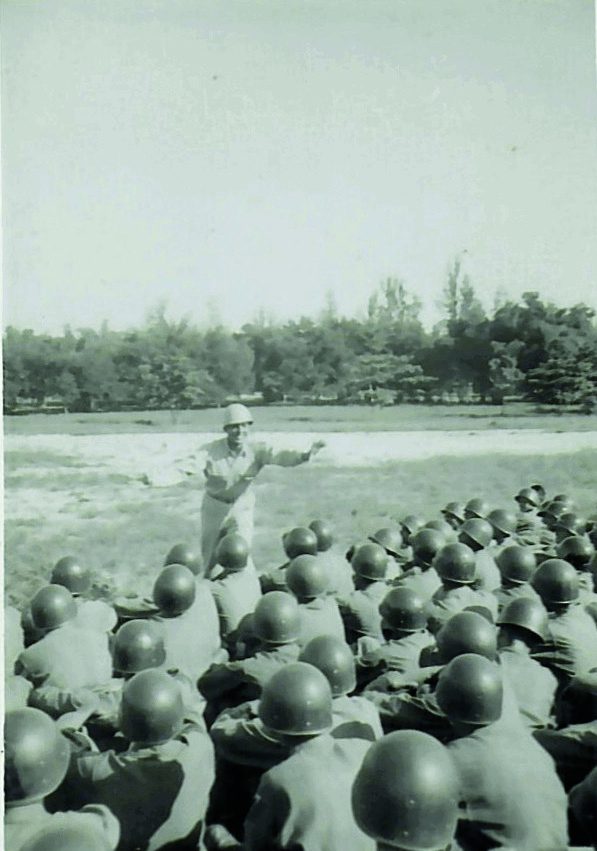
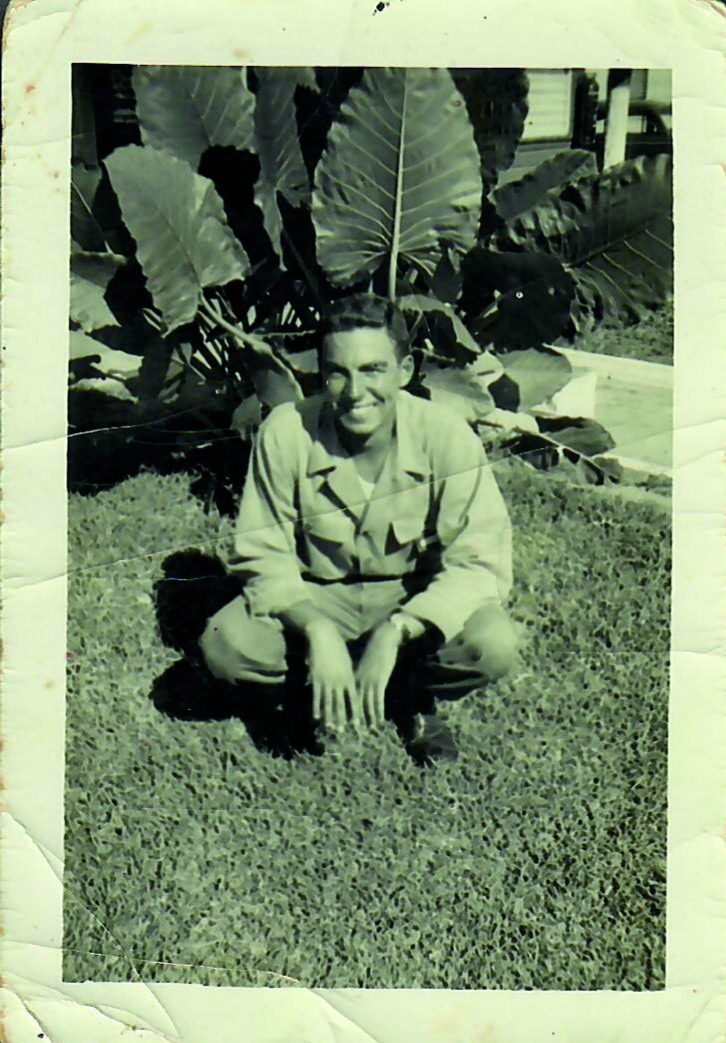
The five-day work week ran throughout the year. Our clothing and uniforms were cleaned and pressed regularly. As far as the food was concerned, the quality was good and, in the Puerto Rican culinary tradition, there was always an abundance of rice and beans for lunch and dinner.
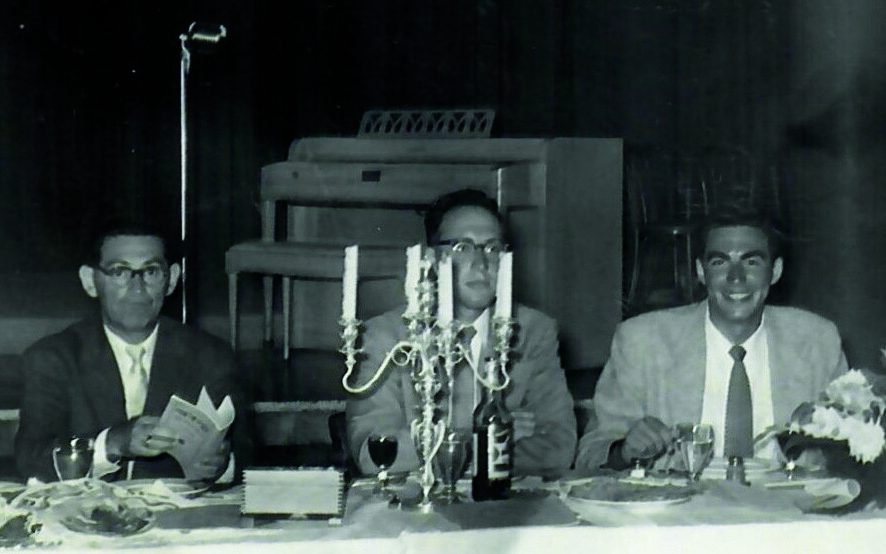
Following are a few photos of me with my army buddies.
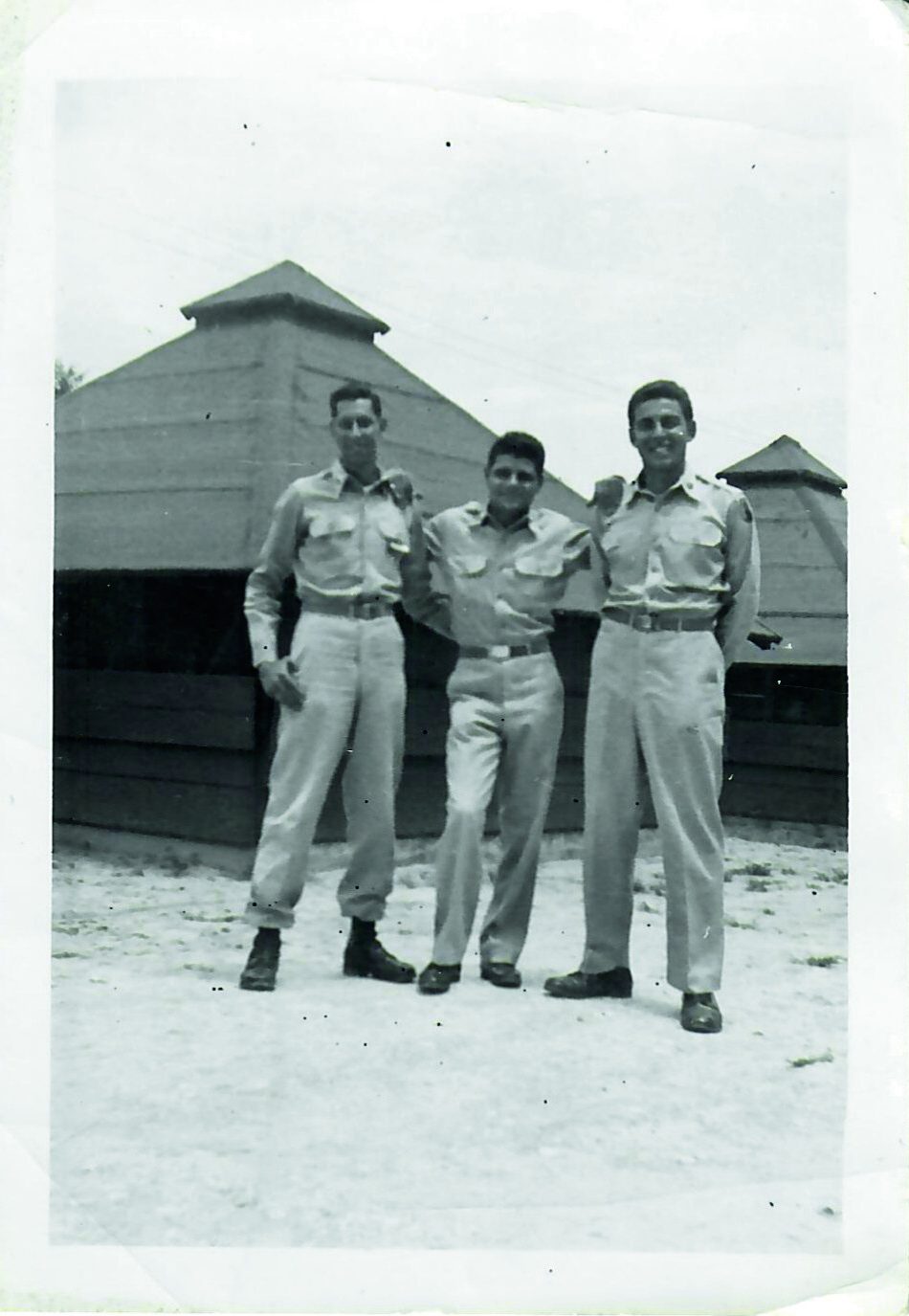
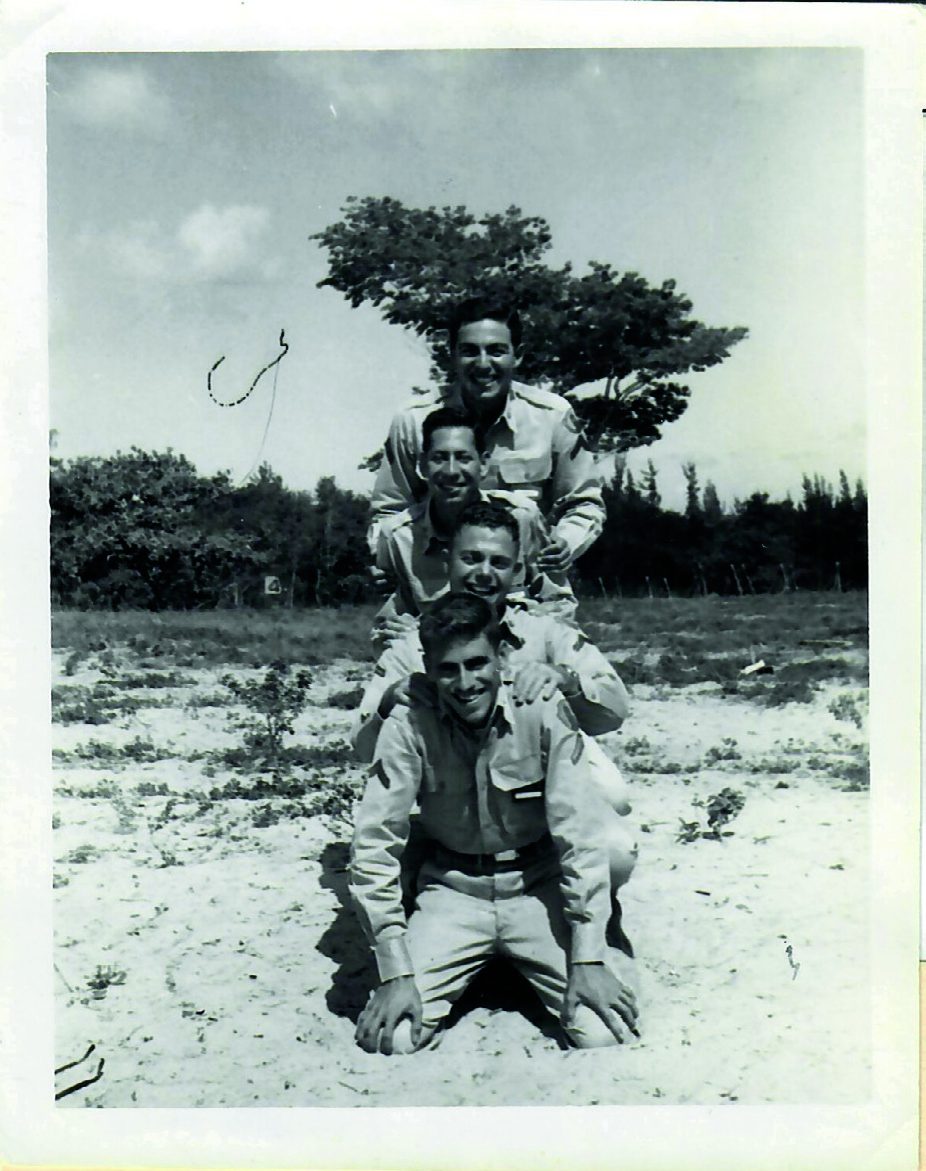
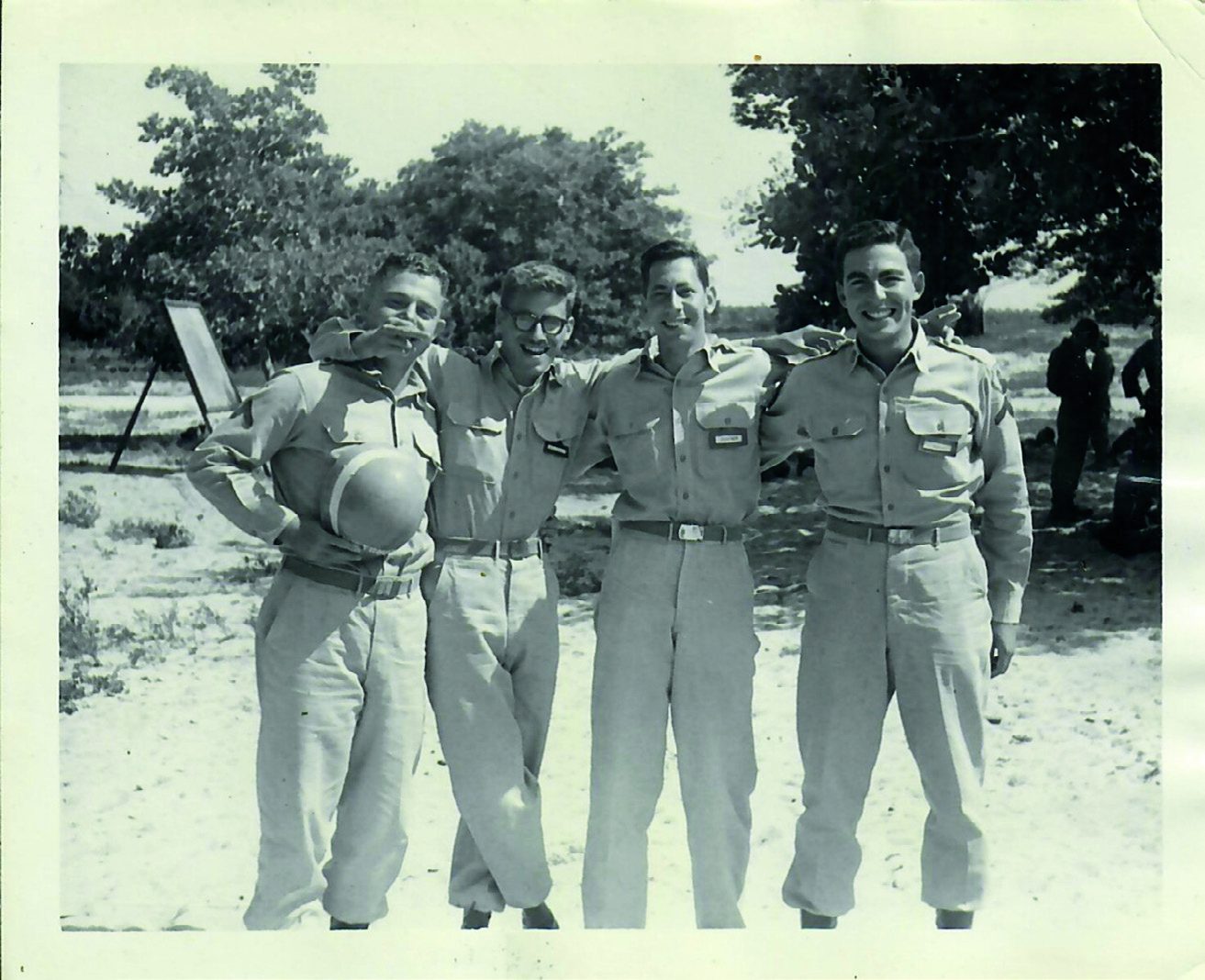
On weekends, some of us would travel to San Juan and visit the historical sights. The army uniform we wore was greatly respected throughout the country since so many of the young men were serving in the military. Hotel rates were drastically reduced for army personnel and discounts for major attractions were available in many places.
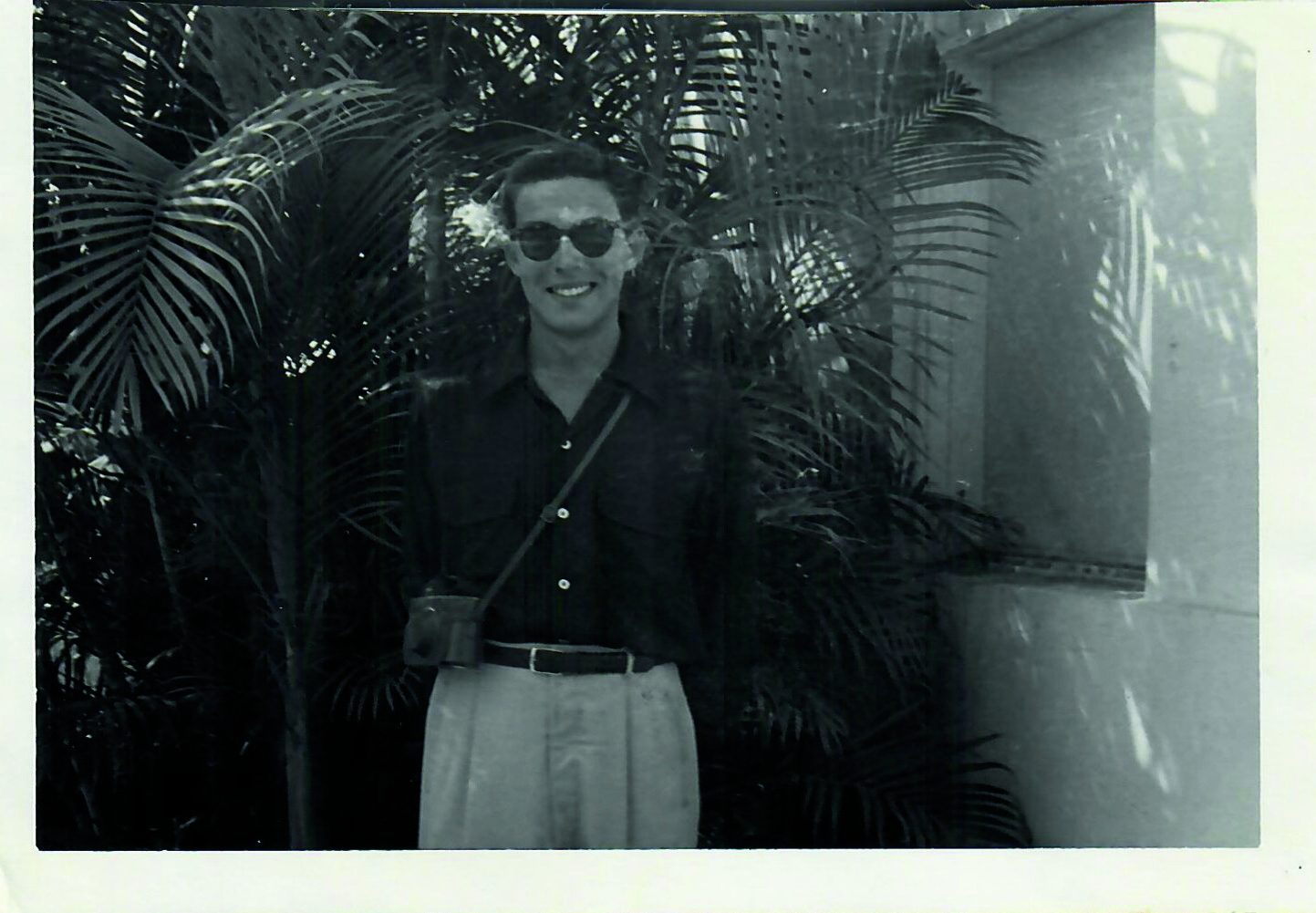
There were 3,500 soldiers stationed at the camp during the winter of 1952. The daily temperature varied from the low to mid 80s. Six of us lived in a wooden hut called a caseta, which was put together rather well. The metal screens around us served as windows. Each bed came equipped with a mosquito net for which we were grateful.
The caseta in which we lived measured twenty feet long by sixteen feet wide or three hundred twenty square feet. Our foot lockers were used as chairs and the latrine, washroom and showers were an easy two-minute walk away. Hot water was not one of the amenities offered at the camp. The huts in our particular area housed many hundreds of soldiers. Comfortable, it wasn’t, but it was adequate for our needs.
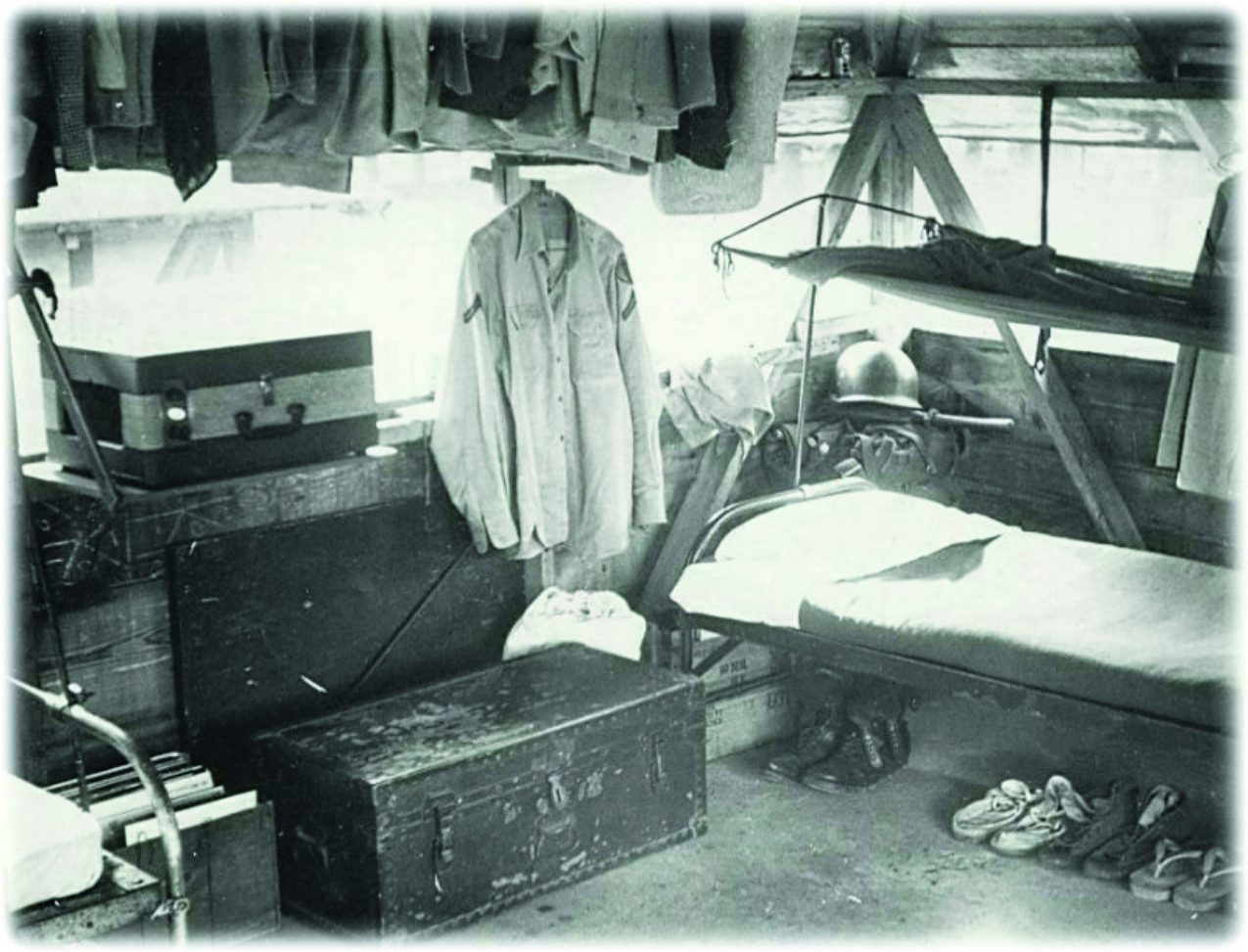
This was our new home and the six of us, Catholic, Protestant, Afro-American and Jewish from New York and Pennsylvania, had to make it work. Together, we amassed a huge long-playing record collection that ran the gamut - from symphonic, string quartets, opera, oratorio and musical comedy to jazz. Each of us was constantly adding to the collection. I greatly favored oratorio and opera. And, significantly, while our religious and musical backgrounds differed widely, we got on well together.
In Korea, things were not going so well. It was, truly, a war zone. December 1952 was one of the toughest and most ferocious times for our soldiers who were fighting and dying there. A number of Puerto Rican soldiers were in great danger in Korea because they could not understand the difference between “retreat” and “advance.” This was an intolerable situation in need of drastic change.
Our mission at Camp Tortuguero was important to all of us, and we understood its gravity. I often started the company lesson with a humorous statement, expression or joke in Spanish. There seemed to be an endless supply of good and short jokes that I was able to get from my fellow soldiers. The discipline in this English class, as you would suspect, was strict and rigid.
When I look back, I am amazed how my life could change so dramatically in only six months. This was only the beginning of what was to follow.
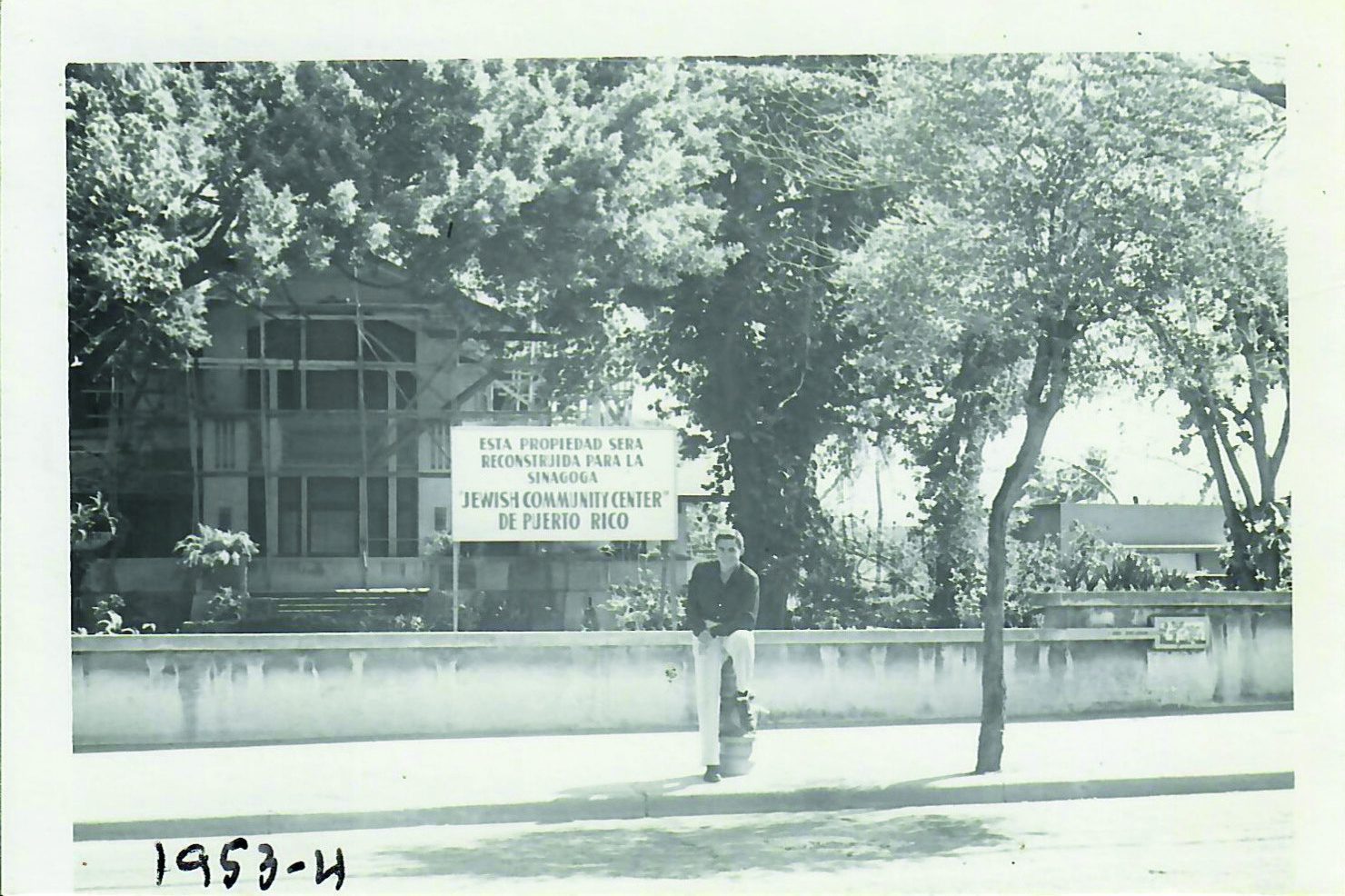
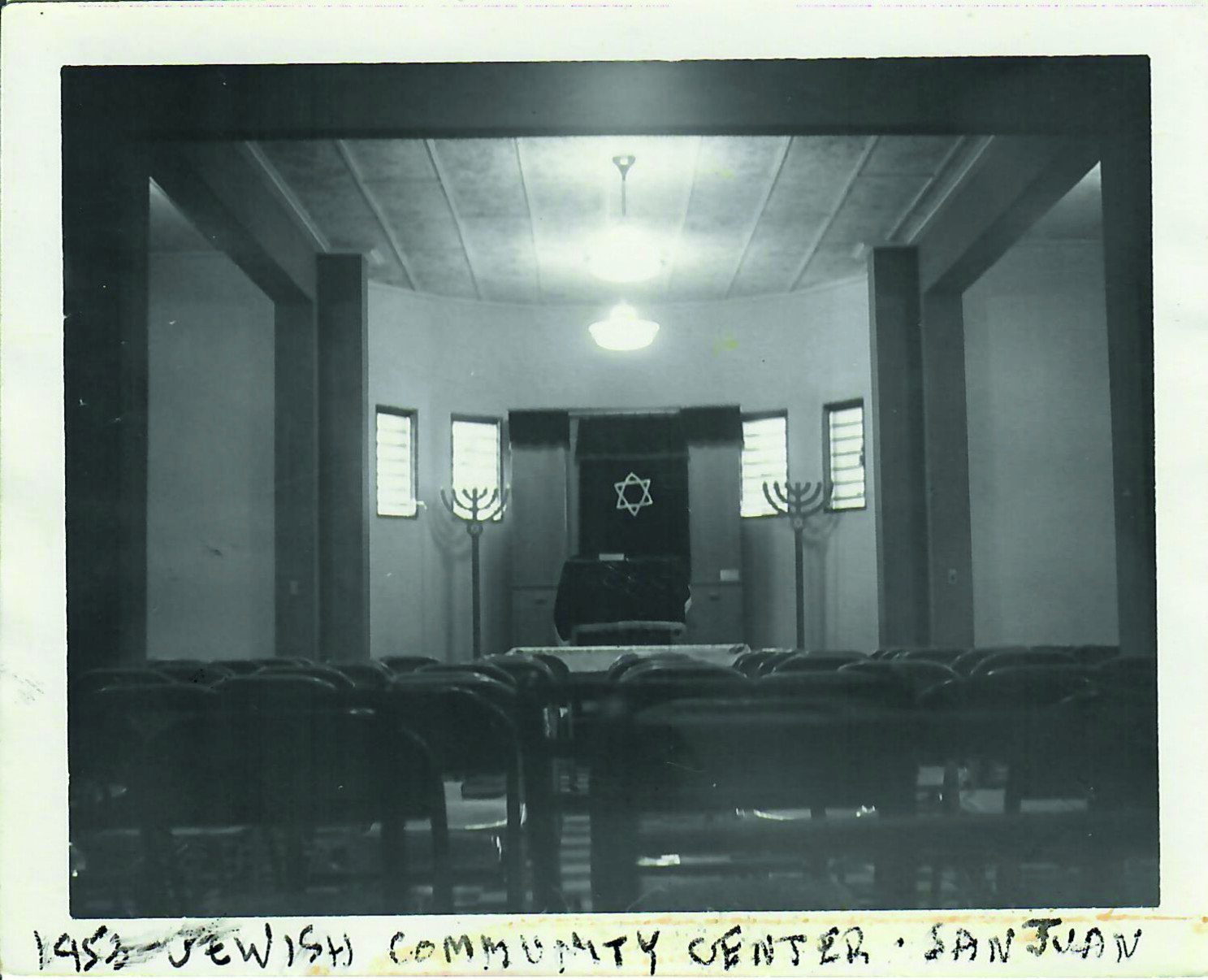
Of the 103 instructors at the camp, ten were Jewish. Since no religious services were offered at the camp, we requested transportation on Friday evening to and from the local synagogue in San Juan. The approval took a week or two, and we soon got our first taste of Jewish hospitality. We were warmly welcomed into a house that served as a synagogue in Santurce, a vibrant section of San Juan. Since there was no rabbi or cantor, the services were conducted by volunteers in the Conservative style.
Synagogue Life in San Juan, Puerto Rico
When we entered the synagogue with our uniforms, the congregants wanted to know all about us - where we came from and what we were doing at the camp. When they found out about my religious background, I was asked to lead the service. Some of us kept returning every Friday and soon were invited to the individual homes of the congregants for appealing Shabbat dinners.
We truly felt at home in our new environment and strong personal relationships were developed. One day, I was at the home of a prominent family, the Shapiros, who owned a shoe factory on the outskirts of town. They told me that if I wanted to become a rabbi, they would recommend me to their friend who was the chancellor of the Jewish Theological Seminary in New York. With full time study, they presumed that I could be ordained in maybe four years or less. “While I admired the rabbinic profession, I was more focused on the music of our people,” I told them. “Well then,” they said, “What about becoming a cantor?” “That’s something I’d really have to think about,” I said.
For over a year, my army buddy, Arnold Raisner, and I, were involved with synagogue life. He came into our caseta at a later date. I officiated at services when I could, and Arnold managed to teach a special class in the religious school when he was in town. He and I were also asked to conduct the Passover Seder at the Casino of Puerto Rico in April 1953. Several hundred congregants were in attendance, and the memory of that evening is one that I cherish.
Matzah Brei
A special treat for me has always been Matzah Brei. It is a combination of matzah and scrambled eggs and is truly a savored dish for breakfast, lunch or even dinner. The specific and full flavor comes when you add sour cream to it. To this day, my mouth waters and my sense of appetite grows in anticipation at the mere suggestion of Matzah brei and sour cream.
Matzah is generally eaten during the Passover holiday. For me, however, it is a treat the whole year through.
I distinctly remember the time that I spent in Puerto Rico at Camp Tortuguero. There were ten Jews in our camp which was located about 35 miles west of San Juan and the holiday of Passover was coming. Where could we get the matzah in time for Passover, I wondered? I wrote a letter to the National Jewish Welfare Board. This was an organization founded in 1917 that was dedicated to supporting Jews that were serving in the military, particularly during wartime. I explained our situation as thoroughly as I could.
To my surprise and astonishment, within the next two weeks, I received boxes of matzah - enough matzah for 100 meals from the Jewish Welfare Board. I arranged a meeting with our army food chef who recognized me as one of the English instructors at the camp. I mentioned to him that Passover was coming and that I’d like to prepare Matzah Brei for the Jewish soldiers to celebrate the Passover holiday. I thought perhaps some of the English instructors and the regular soldiers would like to join us in this Passover lunch. This luncheon would be limited to the first 80 soldiers and, of course, there would be no charge. I mentioned that I would really need the chef’s help to make this idea a reality.
The chef looked at me and said, “I’ve heard of matzah and I’m familiar with the holiday. It sounds like a wonderful idea. I’ll help you in any way that I can.”
On the first day of Passover, following the Seder I led the previous evening, I greeted and welcomed the 80 soldiers that signed up for the Matzah Brei lunch. I explained that matzah is unleavened bread - it has no yeast in it and therefore does not rise. I briefly pointed out that one of the most significant events in Jewish history was the exodus of the Jews from Egypt over 3,200 years ago - from slavery to freedom. I also voiced my hope and prayer that the message of freedom would go out to all the oppressed and enslaved peoples throughout the world.
My message was purposefully brief and I hoped everyone present would enjoy the culinary delight before them. Many liked the matzah brei and some came back for seconds. Several thought that it had an interesting taste. Some didn’t and chalked it up to an interesting experience. But, above all, I think the experience was a positive one in the annals of military life.
Quiñones Vidal, The Radio Host
One Sunday, during one of our trips to San Juan, Arnold and I noticed many people surrounding a broadcast station. Quiñones Vidal, also known as the Bob Hope of Puerto Rico, was hosting his regular radio program, The Tribune of Art. “We’ve got to see this show!” I said, as we walked through the main entrance of the radio station in our army uniforms. Our determination to enter caught the eye of Quiñones Vidal himself who looked at me inquisitively and asked, “Who are you?”
“My name is Irving Shulkes and I’m stationed at Camp Tortuguero,” I answered.
“What do you do, do you tell jokes, do you sing?” he wanted to know.
“Well, I sing songs like “Stout Hearted Men,” “Old Man River” and “Because of You.”
“Those are good songs. Go over to the orchestra leader, choose a song and rehearse the key and if he says okay, that’ll be fine with me. I’ll get back to you shortly.”
He soon returned and said to me, “I’m going to ask you some simple questions in Spanish in front of our audience, but I want to go over a little stage business with you now. When I say “Are you ready to sing Señor Shulkes, “I want you to answer in Spanish, “Yes, but first I’d like to warm up a bit. Will you remember that?”
Minutes later, Quiñones Vidal welcomed me on stage, asked me the customary opening questions and then he asked, “Are you ready to sing Señor Shulkes?”
“Yes,” I answered, “but first I’d like to warm up a bit.”
The radio host then lit up a match, put the light under my hands as I rubbed them together to get warm. “Is that better?” Quiñones Vidal asked. The audience in that auditorium, there must have been a thousand, went wild as they roared with laughter. He knew his audience and was clearly a great show host! I sang there several times.
Army Discharge – A Future in the Cantorate
Following my discharge in 1954, I came back to my family in Brooklyn who celebrated my homecoming. They were concerned about my future plans. Because of my strong yeshiva elementary and high school background, my singing abilities and abiding interest in things Jewish, I told them that I chose the cantorate as my future profession. My mother was thrilled and happy because she loved all things Jewish. My father, while pleased, was concerned at my ability to make a living in that line of work. He was all too familiar with cantors changing positions on a yearly basis in Orthodox synagogues, not earning a good salary and the insecurity of the position itself. Perhaps that was true in the Orthodox, but in the Reform movement, I assured him, things were different - the Cantor-Educator position was one of opportunity and growth.