Several years later, in 1961, I was offered a different and rather appealing position as cantor at Temple Emeth in Teaneck, New Jersey. Since the new position offered much opportunity for musical growth as a cantor and conductor, I accepted it. However, it was not easy for me to leave a temple that I had grown to love and where I developed many close and lasting relationships.
Since the temple was located near the George Washington Bridge, I moved north from the Village to Washington Heights in upper Manhattan, next to Yeshiva University and close to the bridge. At the temple, I was pleased to work with the learned, Rabbi Louis Sigel, who appreciated fine music and was a proficient sight-reader as well.
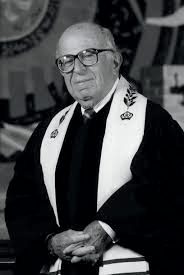
Getting an organist was never a problem since we held auditions, paid well and were able to select the best. We also had a fabulous vocal quartet for the High Holy Days. The youth and adult choirs were soon organized and were prepared to sing at Sabbath eve and holiday programs throughout the year.
The chairman of the ritual committee, Charles Rothschild, championed the best that Jewish music could offer and was at my side in helping me organize our musical concerts. He was thrilled when I asked him to be the narrator in “Song of the Wise.” Chuck Rothschild had great leadership qualities which served our national Reform organization well when he later became the president of the Union of American Hebrew Congregations, now the Union for Reform Judaism.
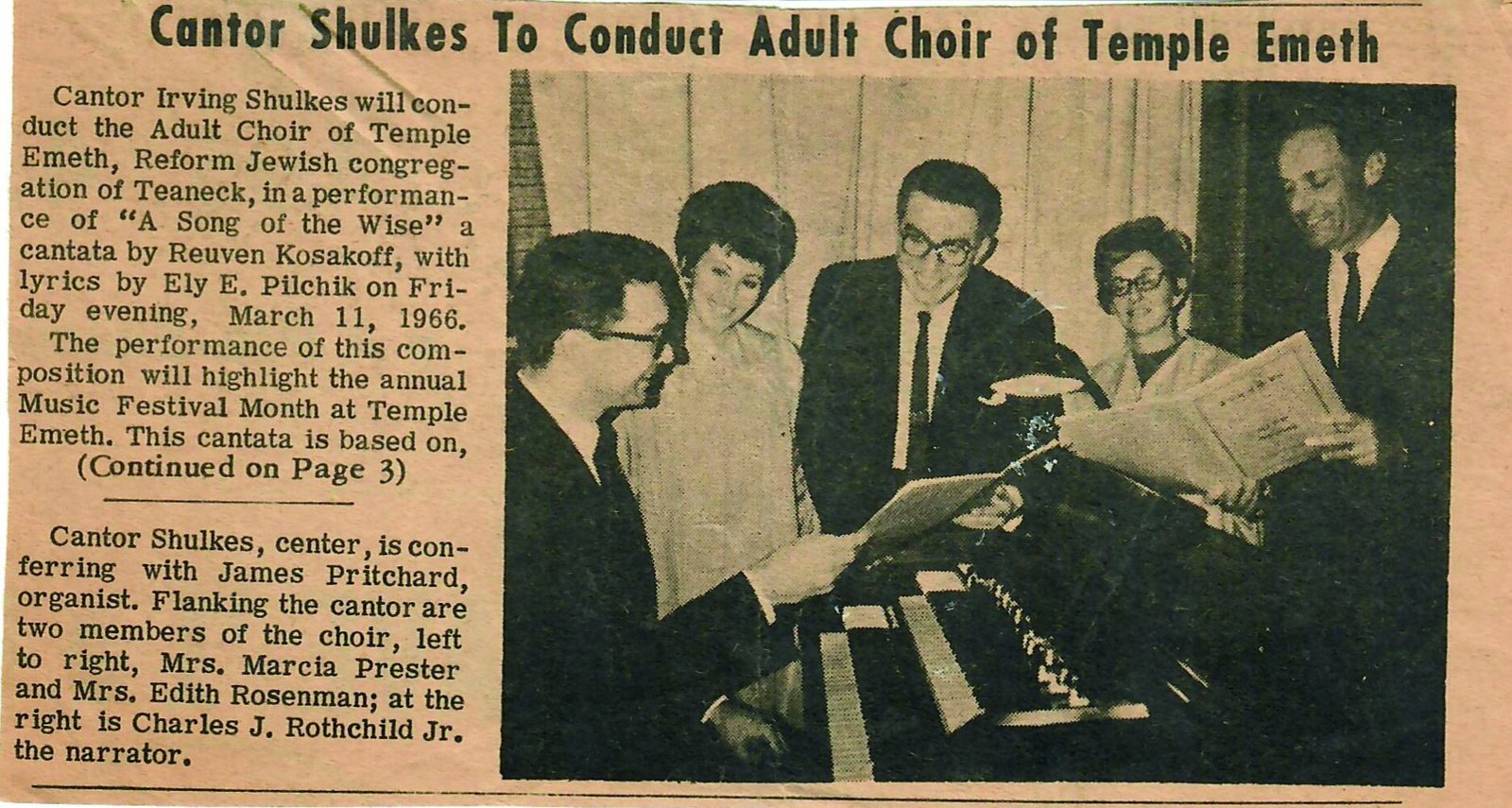
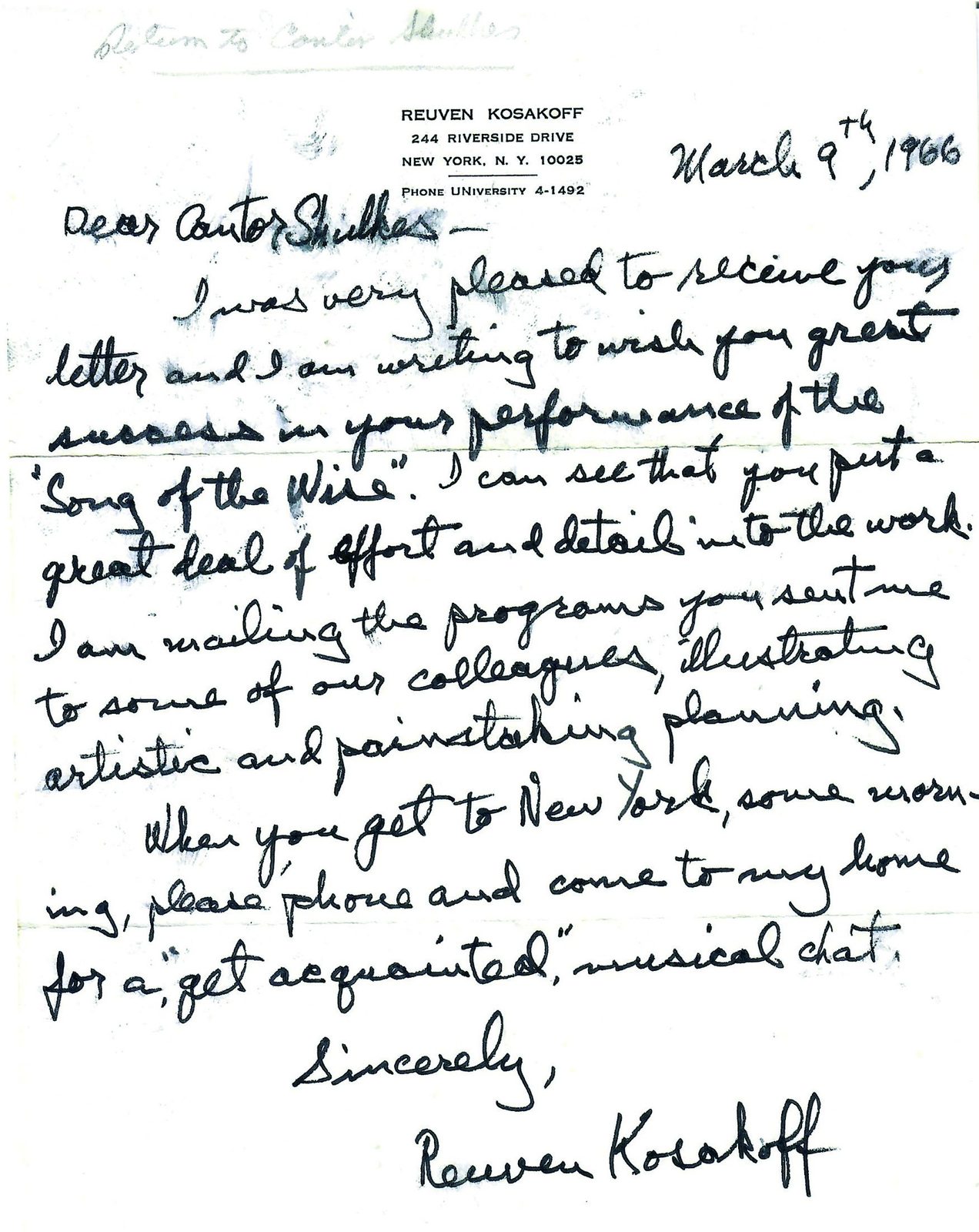
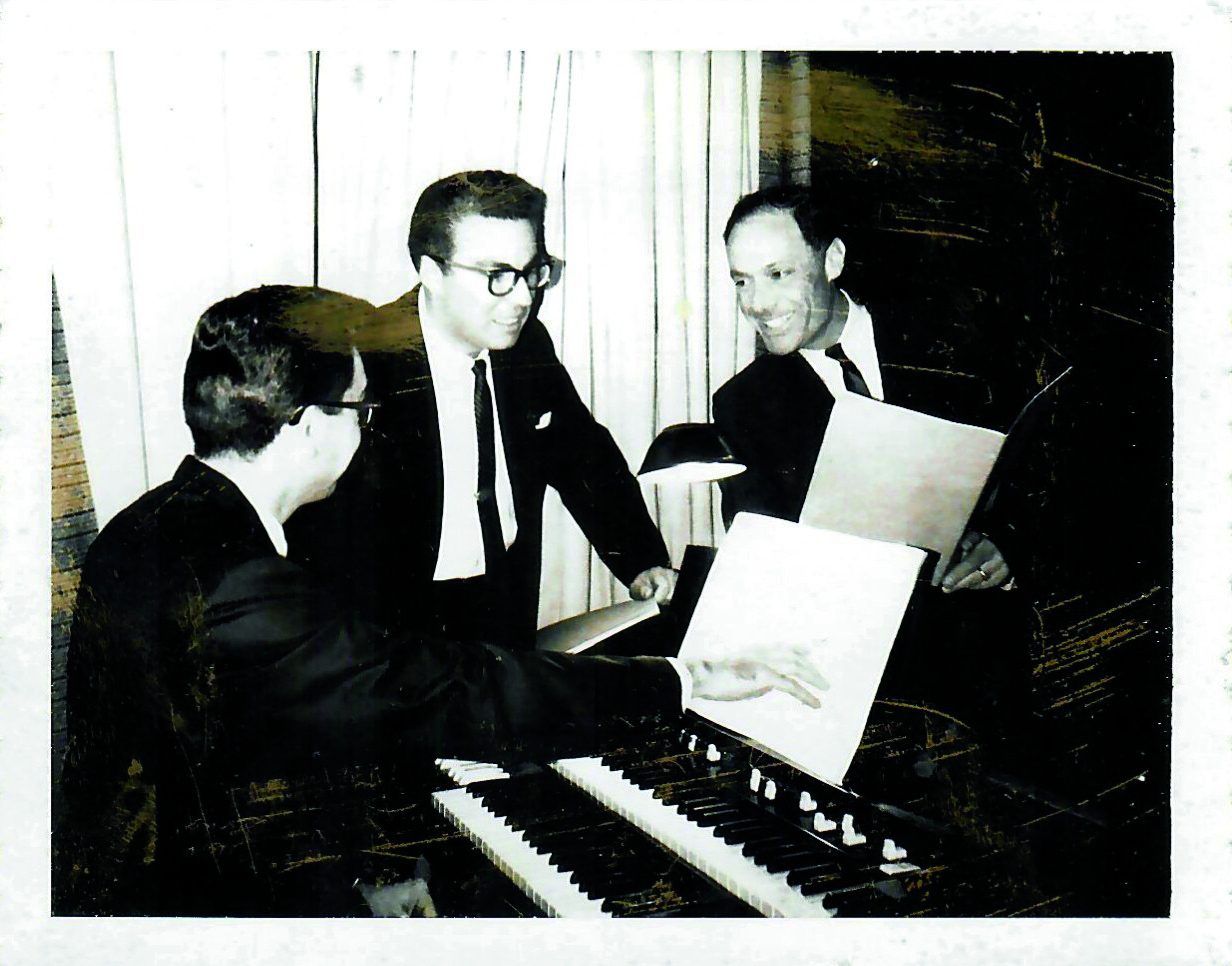
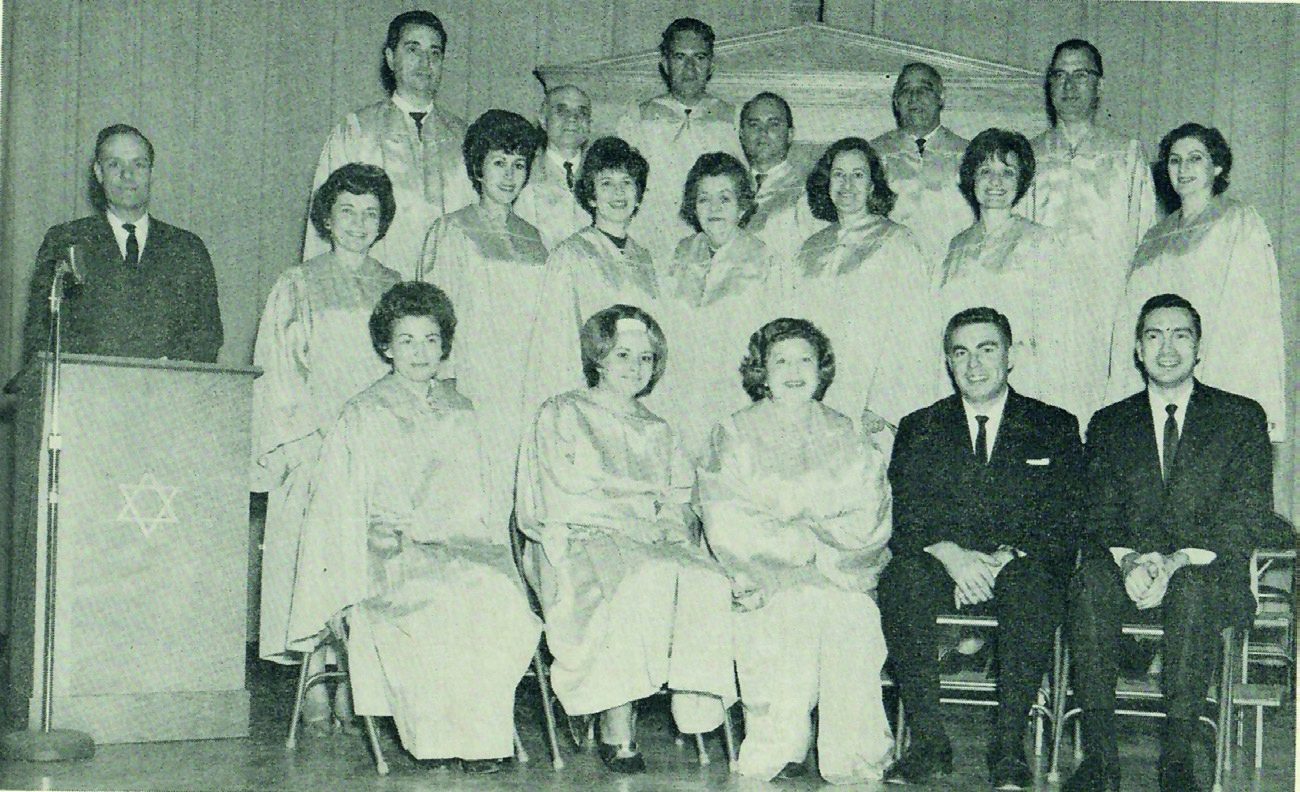
Each year, a cantata was presented at the temple. Some of them were: Reuven Kosakoff’s “Song of the Wise,” Ray Smolover and Charles Davidson’s “The Earth is the Lord’s,” Julius Chajes’ “The Promised Land” and Max Janowski’s “And They Shall Not Learn War Any More.”

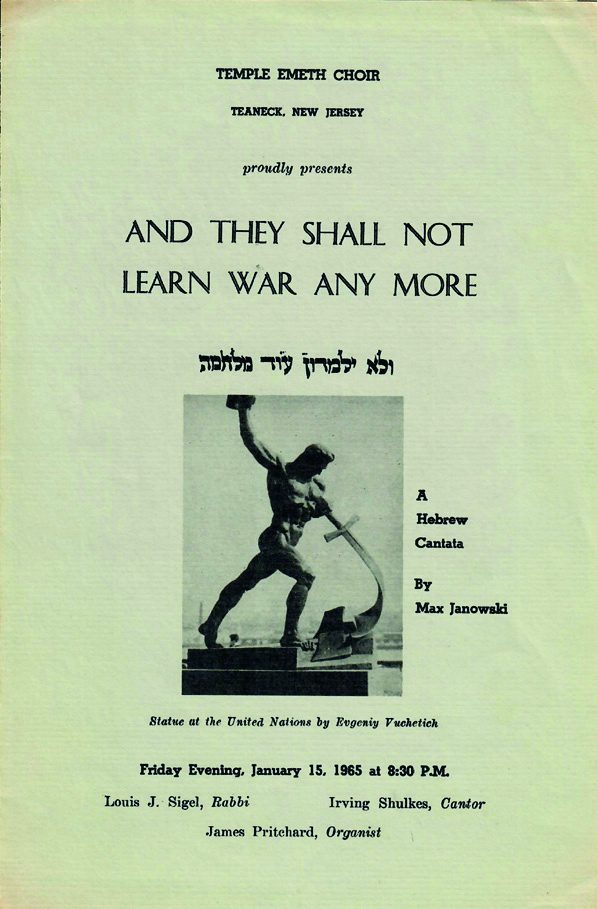
For Max Janowski’s cantata, I visited the United Nations in search of a picture or a sculpture for the printed program that would be distributed on the evening of the cantata offering. I found it at the UN. It was a statue by the Russian, Evgeniy Vuchetich. Taken from Isaiah 2:4, the anti-war statement reads, “And they shall beat their swords into plowshares……Neither shall they learn war any more.”
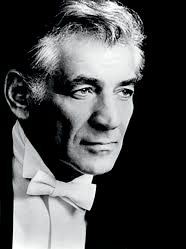
A major musical event took place at Temple Emeth in May 1970 when the Fairleigh Dickinson University Chorus joined forces with our choir in the presentation of Leonard Bernstein’s “Chichester Psalms.” The work was under the joint preparation and direction of Professor John Bullough, chairman of the university’s music department, and me. Temple organist Thom Jonson, a harpist, a percussionist and a soprano soloist helped convey the excitement and optimism of the 1965 Bernstein composition.
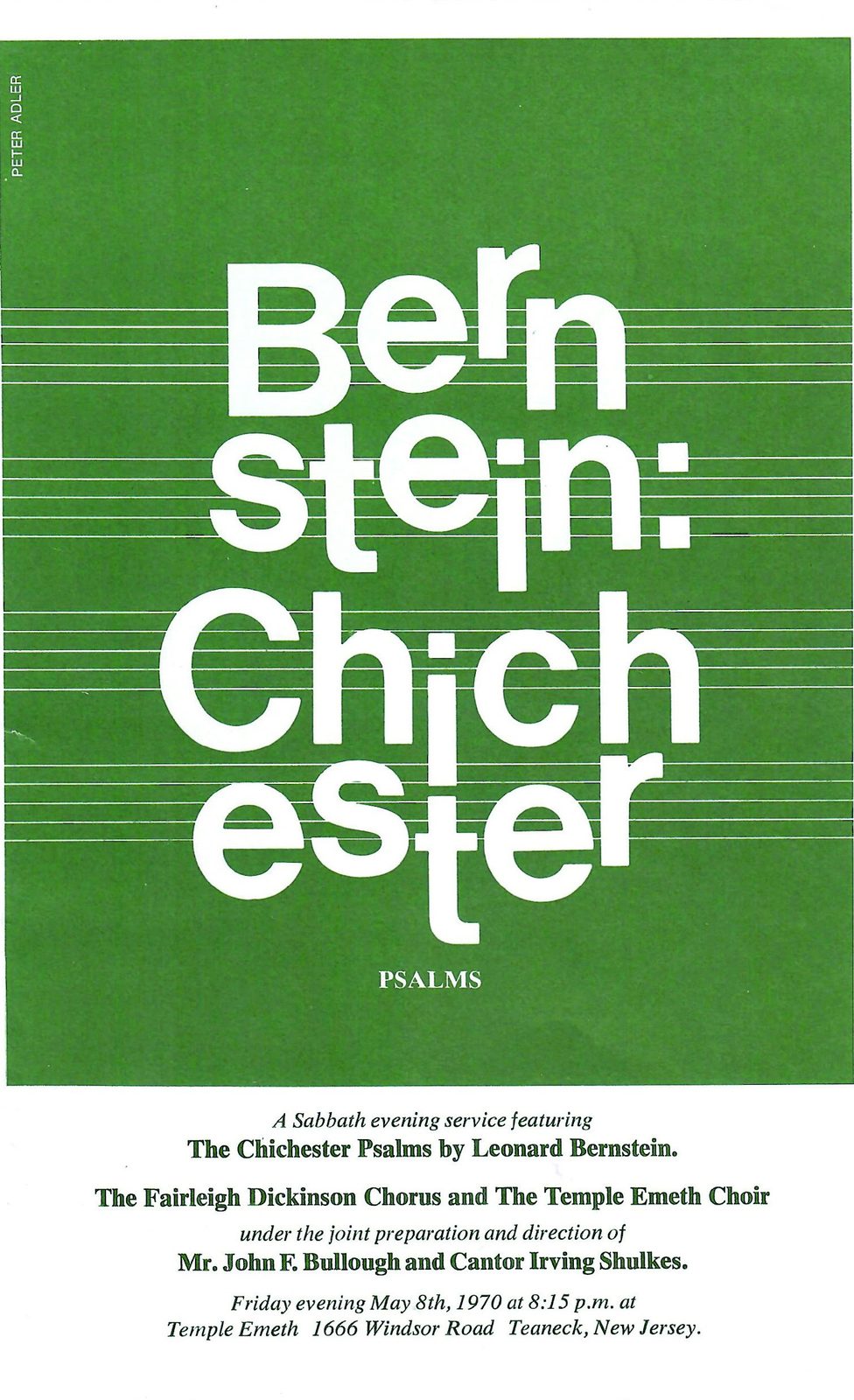
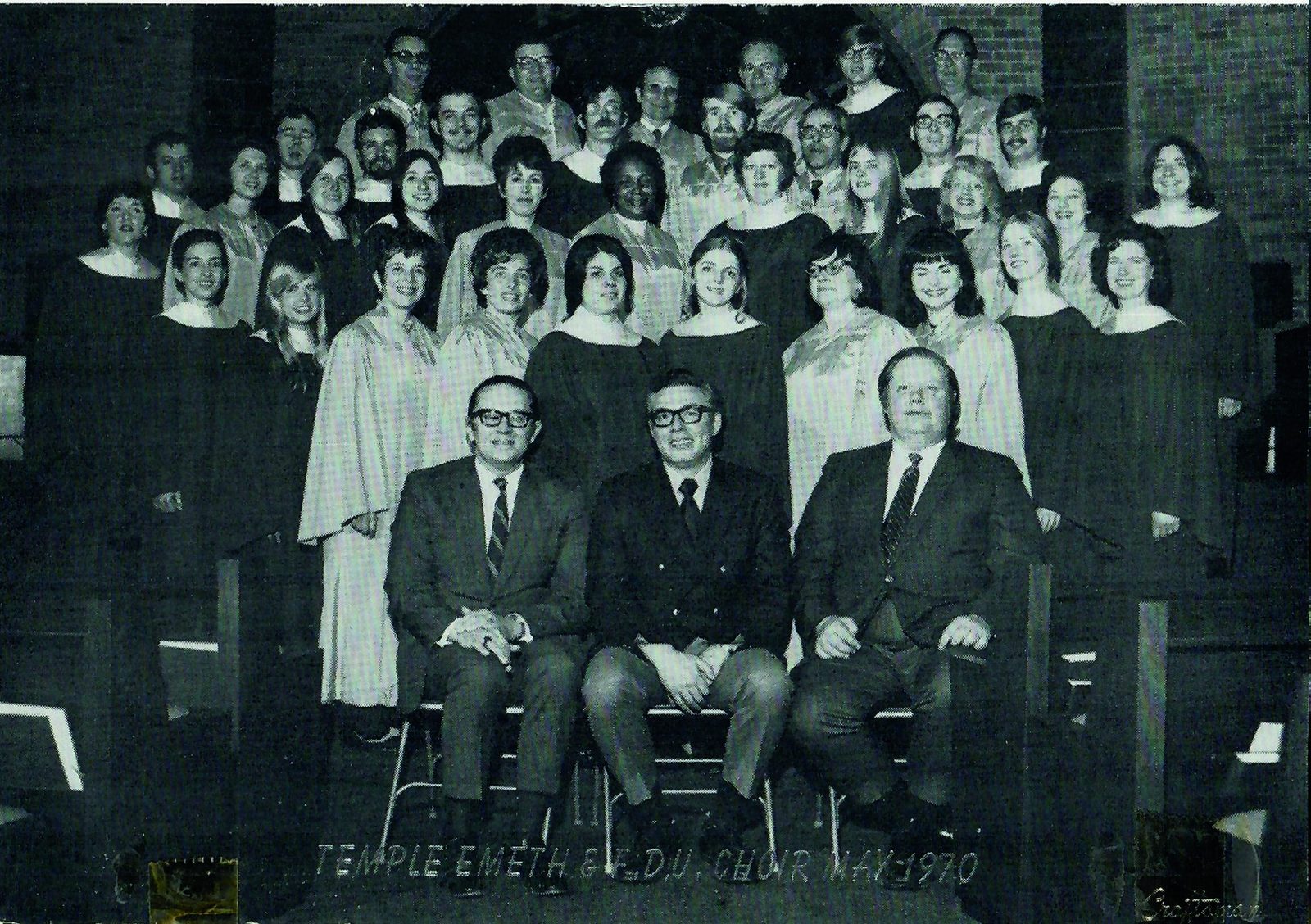
Part one of the Chichester Psalms has a jubilant opening with a 50-voice chorus and instruments joined together for “Awake, psaltery and harp!” I explained to our group that the exuberant spirit of Psalm 100 “Make a joyful noise unto God,” “Serve God with gladness,” and “Come before his presence with singing” was a basic fundamental belief of the Chassidic movement.
The last selection expresses a peaceful glowing quality and concludes with Psalm 133 verse 1: “Behold how good and how pleasant it is for brethren to dwell together in unity.” This beautiful thought is emphasized by a final prolonged Amen in complete unison. What an honor and privilege it was for me to conduct the “Psalms” at my temple that memorable Sabbath evening. On Sunday, the Bernstein work was conducted by Professor John Bullough at the university where it was also enthusiastically received.
Murray and Marcia Prester - Lifelong Friends
Two of my closest friends at the temple were Murray and Marcia Prester. Marcia was a very gifted pianist, and Murray was president of a pharmaceutical company in New York. They both joined the choir when I arrived in 1961. With more than 20 members in the choir, our rehearsals were stimulating and joyful. Sometimes, the rehearsal was just the appetizer, and half the choir and I would meet in the Prester home after rehearsal. We would sing Bach chorales and sharpen our musical sight-reading abilities. Our choir was a place of laughter, fun, and camaraderie. With his busy schedule, Murray found the time to enroll in the evening division of the Juilliard School of Music to study theory, harmony and composition. He was a gifted composer of melody and the appeal of musical composition grew in him substantially.
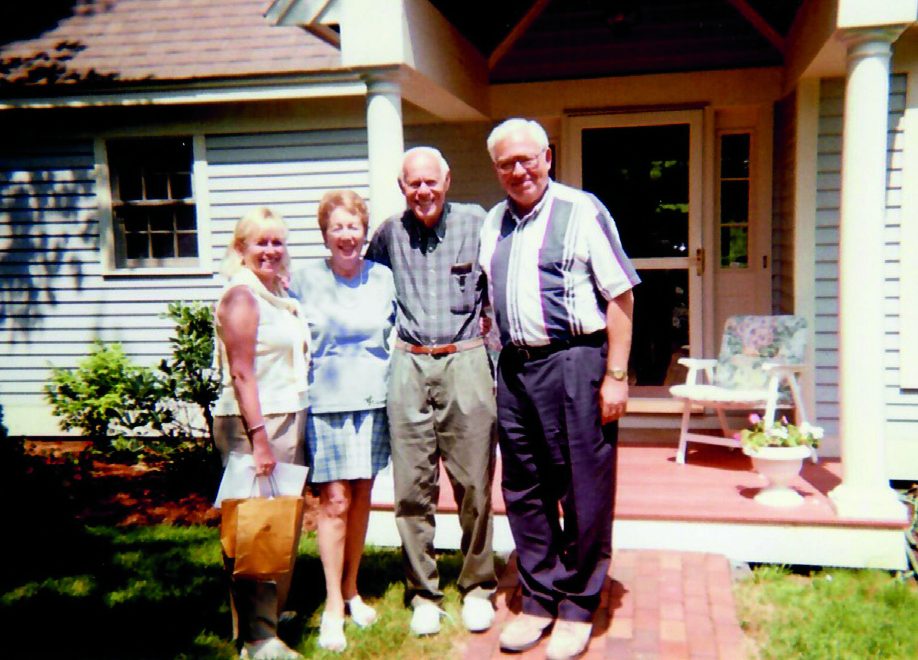
One day, I suggested to Murray that he compose several selections from the liturgy for the choir to sing at services. Surely, I felt, his Jewish background and love for music prepared him for such an undertaking. As a youth, he sang in a choir which familiarized him with the chants and choral works of the synagogue. After several noteworthy creations, the idea of composing a complete musical service of the Sabbath eve liturgy to the inspiring text of the Union Prayer Book, took form.
From the initial concept to the final draft, the work, including the Torah service, took two and a half years. Throughout the service, one feels a richness and variation of mood and melody which heightens the experience of worship. Without a doubt, Murray Prester has earned an impressive place in the ranks of those who have labored in the 20th century synagogue musical scene. His work is called “Shirey Emeth,” the songs of Temple Emeth.
During the 1960s, I was very active in my national cantorial organization, The American Conference of Cantors - with positions as board member, treasurer and, in 1969, that of convention chairman. Our organization was affiliated with the Union of American Hebrew Congregations, the Union for Reform Judaism today. Our 16th annual convention was held at the Pines Hotel in South Fallsburg, New York. Featured were workshops by Max Janowski, who I personally invited to be our musical scholar in residence, and others. There were films and evening musical presentations by quartets, ensembles, organists and cantors from all over the country and Canada.
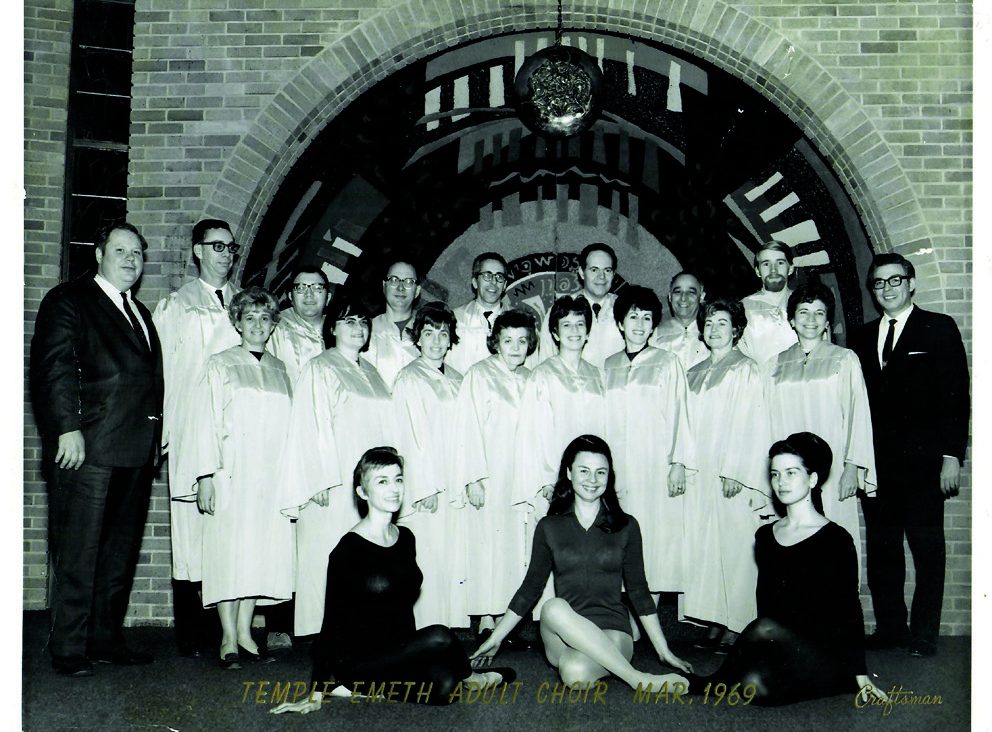
I invited the Temple Emeth choir to come to our convention and share the music of “Shirey Emeth,” the work of Murray Prester, on the national level with the many cantors expected to attend. As convention chairman, I waved the registration fee, reduced the hotel rates and 20 members of our choir showed up and sang. Our organist, Thom Jonson, served as the convention accompanist during the entire convention period.
We at Temple Emeth took great pride in a new voice and “Shirey Emeth” was warmly received at the convention. Jewish creative life was most assuredly enriched by this vibrant work.
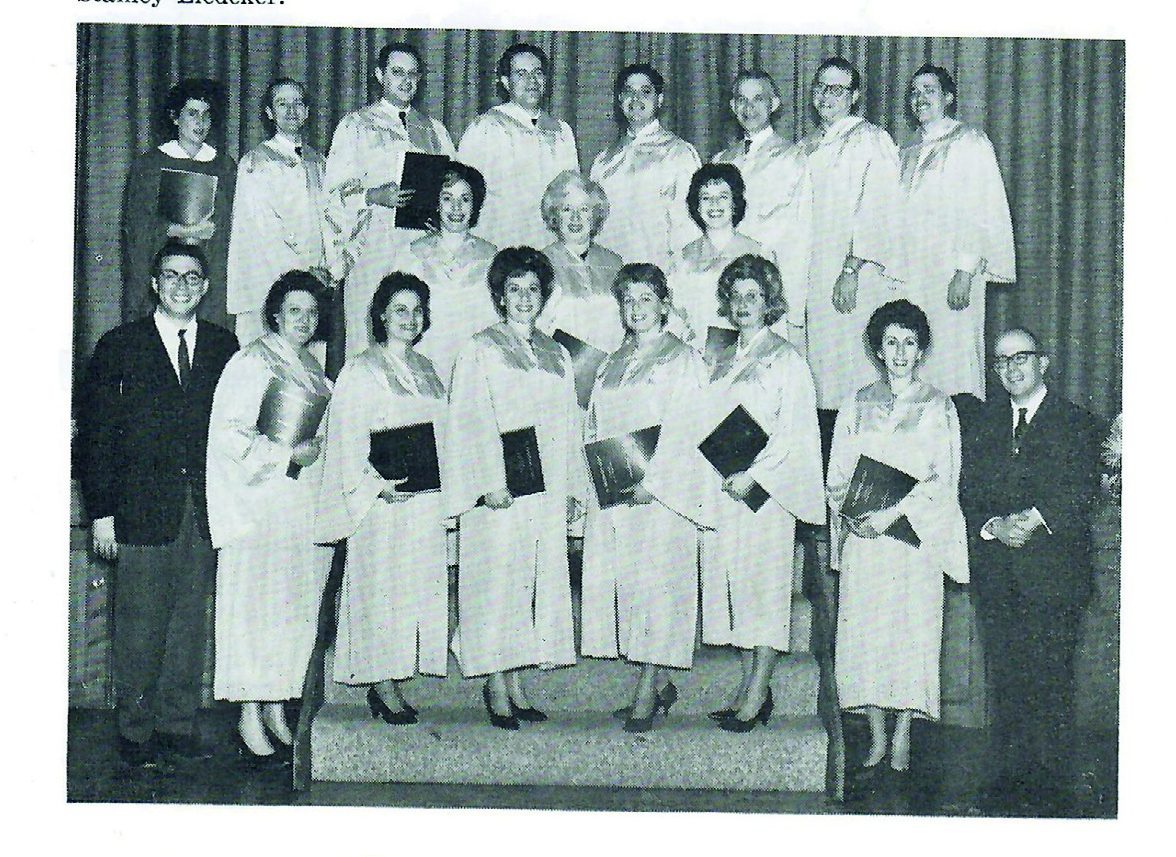
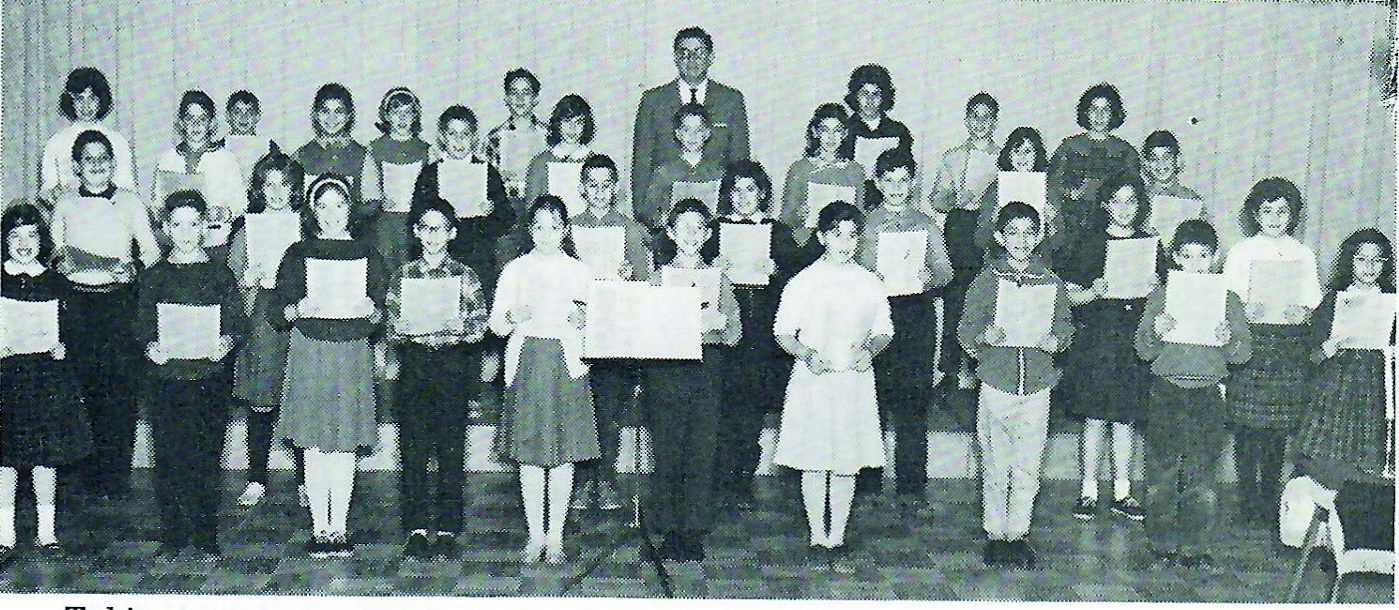
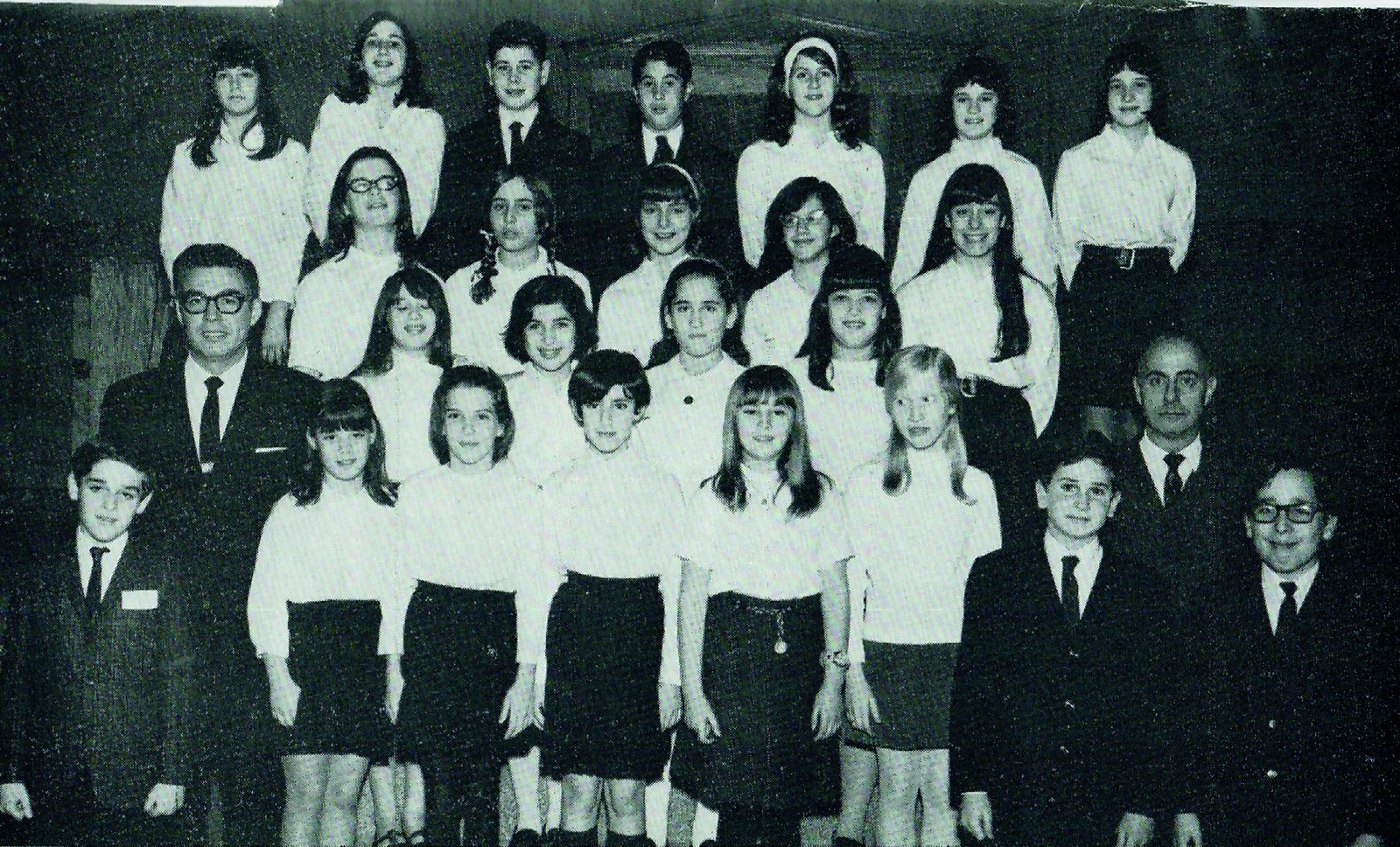
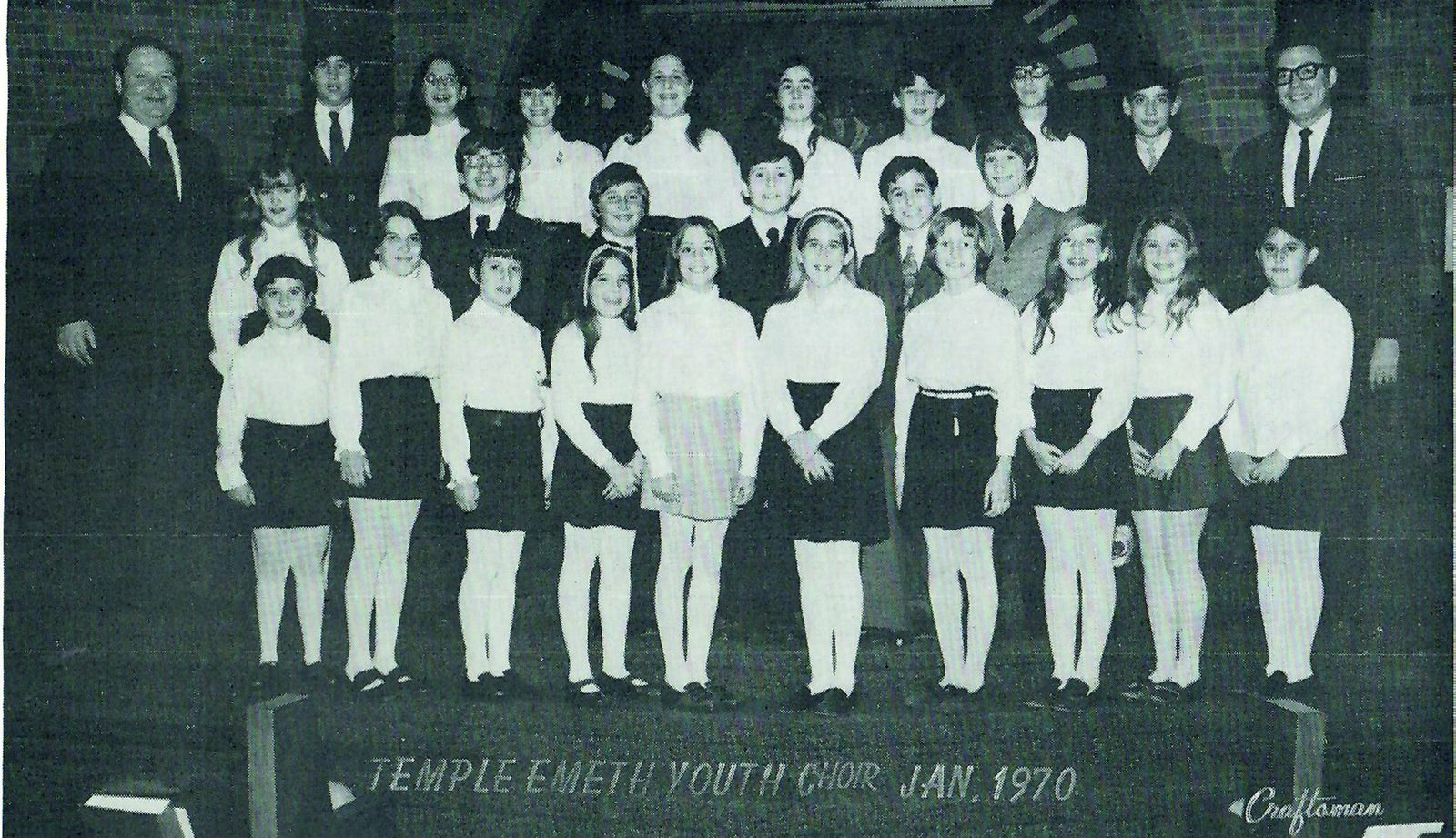
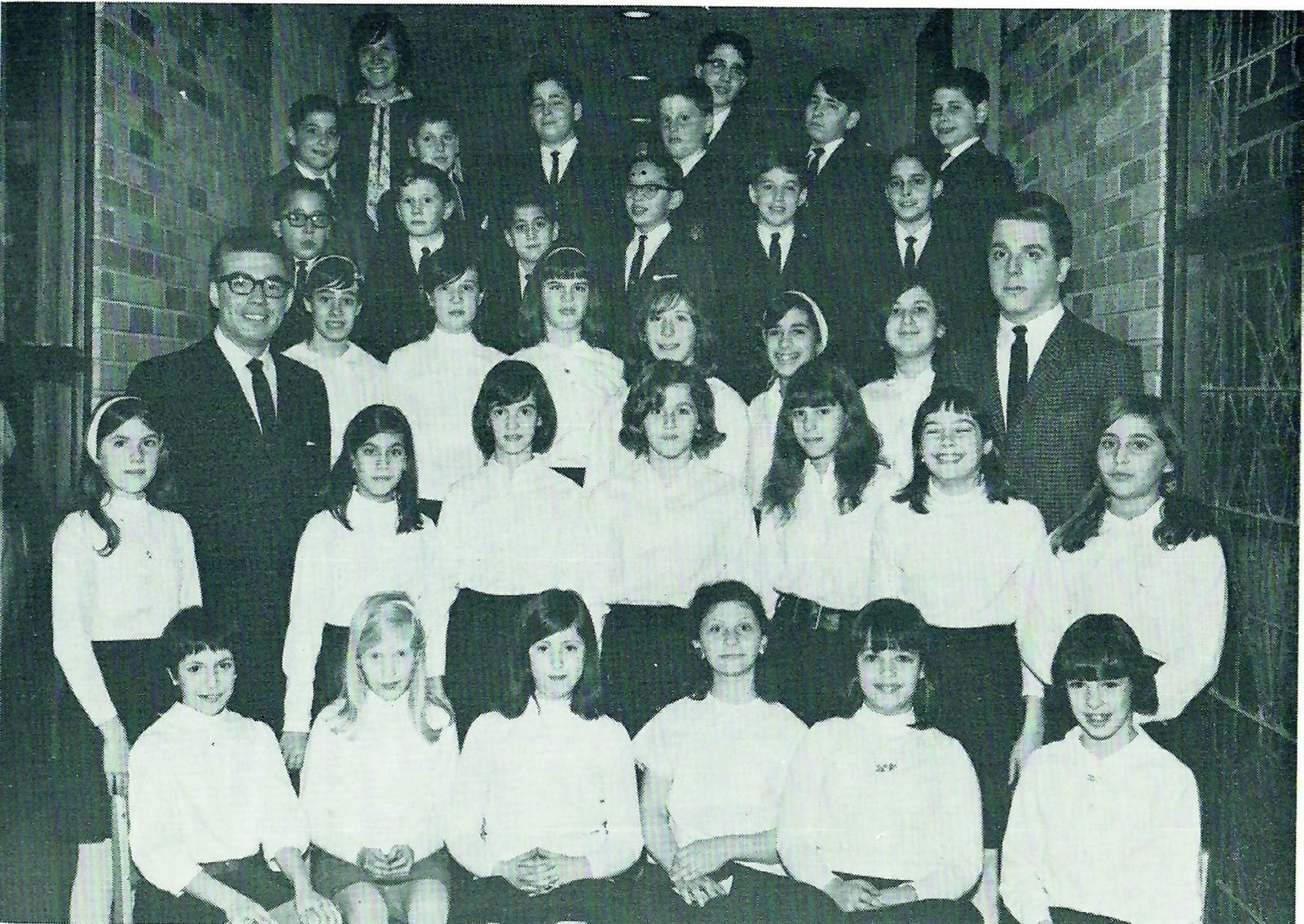
I also took much pride in the development of our children’s choir. They sang at religious services and presented various holiday programs. At one point, our children’s choir participated in a liturgical program along with other children’s choirs in the area. This presentation took place at the Hebrew Union College on 68th Street in Manhattan. That program was not only exhilarating, but inspiring as well.
Temple Emeth Children’s Choir over the years…
The Exceptional Bar Mitzvah Reception
I’ve always had a high regard for members of my congregation. I sincerely like and appreciate them. One of my responsibilities is teaching their children. As one who has trained almost 2000 boys and girls for Bar/Bat Mitzvah over 44 years, I have experienced a wide variety of receptions. One particular reception comes to mind. Mr. Jonathan Lazar, a member of my congregation, engaged a band to play for his evening reception, and the band and their leader reported to him.
“We’re here to play for you. Do you have any further suggestions for this evening?” the band leader asked.
“Yes, I do,” answered Mr. Lazar. “As you can see, there are many people here tonight and the music is very important to me. So, I’ll tell you what. I am prepared to double your fee this evening.”
“What was that …. did I hear you right?” asked the leader of the band.
“You heard me right. I’ll double your fee on two conditions.”
“Tell us, we’re listening.”
“Well, I want you to play continuously,” said Mr. Lazar, “and I don’t want to hear you.”
This is why I remember the evening so well. The sounds of music were nice and soft and very pleasing to the ear.
Some time passed, and I got a call from Mr. Lazar. He was in the clothing business and wanted to show his appreciation for the time I spent training his son for Bar Mitzvah. He sent me to his tailor for a personal fitting to make a suit for me. I saw the tailor twice and, finally, the suit was ready. It was the best suit I ever wore. I sent him a letter which recorded my feelings perfectly. “If I were getting married or being buried, Mr. Lazar, this would be the suit for either occasion.” He loved this comment and called me again to thank me for working with his son.